Last bank holiday weekend was the most exhausted I’ve felt in a long time. Why? I launched an online bakery – Kate’s Kitchen – in my village!
As a travel writer I try to focus on relevant food stories and the cultural history surrounding food when I can (you may have read my post on the history of the tagine), so it’s not such a leap to be in the business of baking as well as writing.
Assuming most of you don’t live nearby to me in South Somerset in the south west of England, having a browse of the Kate’s Kitchen menu is unlikely to result in me being able to deliver you a big Mediterranean vegetable-topped focaccia or a loaf of Finnish rye bread — sorry about that! But you can probably spot that a love of travel, other cultures and cuisines is a definite influence, as are local ingredients.
Though I’ve got to be honest and admit that if I could be travelling far and wide at the moment, I would be. 2021 was meant to be a gap year (ok, a second gap year) — so I really, really wouldn’t say no to someone else cooking for me a thousand (or even just 150) miles away, by a beach, up a mountain, in a shack. Much as I’ve enjoyed learning to make my own ‘proper’ Napoli pizza and semi-master a pasta machine.
So I’ll end this brief-ish blog with a related plea.
In the interests of research I’d love to know: what foods and cuisines from past travels (or former neighbourhoods, faraway or not) do you miss and crave the most? Have you tried making your own versions? What worked and what didn’t?
For me I’ve really missed eating out in Italy, anywhere, anywhen, all times of day, preferably with a Hugo cocktail of elderflower, Prosecco and soda close by. Artful artisan creations from French boulangeries (the magnificence of the chestnut-choux Paris Brest pastry, pain au raisin snails meant for kids, macarons — and basically anything else on a counter behind glass). Swedish cinnamon and cardamom buns eaten in achingly Scandi, white-tiled cafés. Bright, fresh, spicy, comforting Thai street food. The really ravishing rotis from tiny Malaysian restaurant Roti King in London. Danish smørrebrød open sandwiches all seeming to end up with a bright smear of beetroot dressing…. Ramen ordered from vending machines in Japan….. giant sunflower seed-fleckled pretzels in Berlin train stations…. sorry, I’m daydreaming again.
I’d genuinely really love to hear what food has been at the front of your mind, on the tip of your tongue, on the top of your list this past year or more.
Feel free to share in the comments below, or you can email me at hello@kateskitchenbakery.com. Who knows, it might be coming to a menu nearer to you than you think…
For some people, St George’s Day (this past Friday) represents folklore and myth, dragons and slayers. For others, it’s more an excuse to feel extra patriotic — or, in the case of two people in my village, a reason to enquire ask why the old church wasn’t flying an English flag (sigh).
For me though, this time of the year marks a chance to celebrate surely the greatest playwright of them all, William Shakespeare.
He was baptised on 25th April, 457 years ago, supposedly two days after his birth on St George’s Day. The parish records also show that he was buried on 25th April in 1616. Therefore many have come to the natural assumption that he must have been born and died on the same day, two days before each parish record entry. There’s definitely a handy timeliness to this assumption, though it wasn’t a very good final birthday, was it…
Anyway, as a way of celebrating the great bard in some way, and because we’re all still starved of much of the joy of journeys, here is a worldly whistle stop tour of earthly theatrical delights, past and future. There are four(ish) stops, to be precise about it.
It’s worth saying at this point that it’s not thought that Shakespeare ever left England in his lifetime. He just leaned on those two stalwarts, imagination and curiosity. A lesson for us all?
The wooden O
…But pardon, gentles all, The flat unraised spirits that have dared On this unworthy scaffold to bring forth So great an object: can this cockpit hold The vasty fields of France? Or may we cram Within this wooden O the very casques That did affright the air at Agincourt?
Henry V, Prologue
What I wouldn’t give to have been around in 1599 to see Henry V and other plays put on the stage of the new Globe playhouse in Southwark, London. The ‘wooden O’ referred to in the prologue was the Globe theatre itself. Shakespeare wanted to emphasise its power to take his words and transport his audiences away from their cares and their troubles, over to vastnesses elsewhere.
The wooden O was rebuilt 398 years later when I was 10. Old enough that I could have pestered my Dad to take me to see Henry V when again it kicked off opening proceedings.
I’ve made up for it since though. I actually don’t know exactly how many times I’ve stood or sat, enveloped within the Globe’s circular walls (which, psst, are actually not technically round) — absorbed by a history play, tickled by a comedy, distraught in the hands of a tragedy.
But I’ve easily seen over 40 plays there and if I had to pick one place in the world that I probably miss the most, it would be that little corner of south London. Two of my friends passed it on a walk recently and sent me a selfie. They knew.
I am therefore incredibly keen to return this year, perched somewhere under the thatch, cider in hand, Shakespeare on tap.
I recommend… booking now for the summer season. The usual capacity seems to be greatly reduced, so dates are likely to start selling out soon, if they’ve not already. I’m excited to see screen and stage star Alfred Enoch (yes, Dean in Harry Potter) in Romeo & Juliet, opposite Rebekah Murrell.
A vintage year
Five summers have I spent in farthest Greece Roaming clean through the bounds of Asia And, coasting homeward, came to Ephesus.
The Comedy of Errors, Act 1, Scene 1
I know I’m heavily biased because I lived in London at the time and I went to so many events during the 2012 Olympics (sorry), but if you were ranking great years we’ve had in the past decade, 2012 has got to be top of the list. So many sports, so much support — and what a coming together of cultures it was too. In theatre especially.
Shakespeare’s Globe held a season called Globe to Globe, putting on almost all of Shakespeare’s plays (plus one of his narrative poems), each in a different language.
Sport brings nations together, but ultimately it’s to compete against one other. But here the arts were, bringing people from all across the world together in one theatre.
From Love’s Labour’s Lost in sign language and The Comedy of Errors in Dari Persian to Venus and Adonis in IsiZulu, IsiXhosa, SeSotho, Setswana and Afrikaans; Julius Caesar in Italian, Troilus and Cressida in Maori and King Lear in Belarusian. I attended as many as I could squeeze in, but King Lear remains one of the most vivid of nights.
The Belarus Free Theatre who performed it so electrically were in a position of not being allowed to perform openly in the Lukashenko-led regime of their home country — they had to perform in secret, private locations, such a garages belonging to the cast.
I remember that the director delivered an impassioned speech on stage at the end, urging us theatregoers to remember how lucky we were to have the freedom to choose what we wanted to watch. That most performers could get away with simply performing whatever they felt like performing. Buckets were passed round as the audience emptied the Globe and spilled out towards the Thames, inky by night. A humble request for donations to enable them to keep touring and the light flickering.
What’s changed for them? They’re still standing up to the regime, which hangs on by a thread. One which many of us hope will snap soon.
The Forest of Arden in As You Like It. The Athenian woods of A Midsummer Night’s Dream. Those moving trees in Macbeth. Storybook woods, alluring in their depth and spellbinding mystery.
Shakespeare clearly enjoyed writing folklore into his woodlands – merry outlaws with Robin Hood qualities, potions, fairies and magic – but it doesn’t mean he didn’t draw on places he knew, forests he had walked through.
I always thought that the Forest of Arden had to be a real forest. His mother’s surname was Arden after all. But then I couldn’t see a mention specifically of a wood on a map (if I search it now, I get a Marriott Hotel) and so I thought that maybe Shakespeare had led us all on a merry chase though pure fantasy forest.
But: the National Trust to the rescue, it did exist! Shakespeare must have walked through it regularly if not frequently. And some of it still exists today, albeit in pockets, mostly converted to farmland now. Sadly that is often the story of Britain’s woodlands, but at least we now recognise (again) the important role they play in an ecosystem.
I recommend… the beguiling pull of nature that weaves its way through the utterly compelling novel Hamnet by Maggie O’ Farrell. The title refers to Shakespeare’s son (born a twin with Judith Shakespeare) but actually I found it painted a completely real and true-seeming picture of another important Shakespeare family member too. But I don’t want to spoil it if you haven’t read it! I wish very often that I could wipe my mind of the memory of reading it, and read it for the first time all over again.
Now is also a great time to go in search of bluebells and wild garlic in your local woods.
Italia 1590s
In fair Verona, where we lay our scene…
Romeo and Juliet, Prologue
Fair Verona… not quite how I remember it when I visited, but they sure know how to market the hell out of a fictional tragic love story.
Juliet’s house and balcony? Tick. Juliet’s tomb? Tick. Romeo’s bathroom? Just kidding. ‘Juliet’s balcony’ was built in the 1930s and ‘Juliet’s tomb’ is literally just an empty sarcophagus in thechurch of San Francesco al Corso, but it is a pretty setting nonetheless. Oh, and don’t forget a sharpie when you visit the balcony for a selfie, if you want to graffiti your message of undying love to whomever you wish to declare it to, on the way in. I won’t fill you in on what some people pinned to it instead…
Poking fun aside though, I had a lovely time when I visited with my friend Kim a few years back. Yes, there was some touristy tackiness going on but under the balcony we met a pianist who was on holiday too, decided to hang out together and have a delicious meal in a local restaurant. A wonderful evening under a starry, late summer sky.
All that glisters is not gold…
A little more haunting but peaceful nonetheless, I wholeheartedly recommend heading to the north west area of Venice at night, walking through the Jewish quarter, once the Jewish ghetto, instituted in 1516 to segregate the Jewish population. In English we in fact have taken the word ghetto from the Venetian use of the term. I dare you to stand in the Campo di Ghetto Nuovo square and not feel the past tap you heavily on the shoulder. Or hear the hushed lines of The Merchant of Venice rushing by, woven into the blustered breeze. Am I over-romanticising it? Maybe. But trust me.
I recommend… If you’ve never had the pleasure of watching it, the 2006 BBC TV series Venice with Francesco da Mosto is a delight. He’s lived in Venice all his life and what he doesn’t know about the city is almost pointless knowing.
For something tasty out of the kitchen instead, give this recipe by Nigella: tagliatelle with chicken from the Venetian Ghetto. It is inspired by recipes from Claudia Roden, a cookbook writer and cultural anthropologist.
And that’s that. A very whistlestop tour. There’s so much I didn’t fit in, so I’ll leave you with my 6am ramblings this morning:
Venice – Merchant, Othello/ Ithaca?? / fictional Illyria – Twelfth Night. Croatia let’s say! / Denmark – Hamlet (visiting the fortress) / Verona – Romeo and Juliet – underwhelming at times but when opera is on in the city, it’s great/ Scotland – the Scottish play! / Ancient Rome / Ancient Greece / Troy during the Iliad – Troilus and Cressida / Greece – Midsummer! Should have guessed but seems more otherworldly / Greece – Comedy of Errors (quote 163) / Vienna – Measure for Measure / Padua & Warwickshire – Taming of the Shrew (Arabian Nights influence) / France and Spain – Love’s Labour’s Lost / Messina, Sicily – Much Ado & Leontes King of Sicily in The Winter’s Tale / Paris and Florence – All’s Well That Ends Well / The Aegean – Pericles / New World of The Tempest.
Many of us think of Windsor Castle when we think of Windsor. It represents over a thousand years of royal history. But when I think of Windsor, I also think of log flumes.
Don’t get me wrong, I do think of the Windsor Castle bit of Windsor, it’s a stunner of a building. And the events of Prince Philip being laid to rest yesterday brought the place freshly back to mind (I am unashamed to say I did weep while watching). But when I think of a childhood of day trips to Windsor, it is mainly the log flume and the panning for gold – not forgetting the dragon rollercoaster – that spring to mind.
I’m talking (as some of you may have guessed) about Legoland Windsor. Greatest theme park in the world, no question. At this point, you might think that there couldn’t possibly be a royal connection to the above photograph of my mum and I surviving the Pirate Falls log flume. You’d be wrong.
I’ll give you a clue: this photo was taken on the afternoon of Saturday 6th September 1997. That was the day of Princess Diana’s funeral, watched by over 31 million people in the UK, including us.
It also happened to be my 10th birthday.
I definitely remember that birthday and all the events of the previous week more vividly than I otherwise would have. I didn’t really have the biggest concept of grief and loss then, but it was the kind of time in history that you never forget. Like right now and this past year, for instance.
I opened my presents over breakfast and then on the TV went. There was no way we would miss the funeral. Perhaps my parents might even have considered going into central London had it not been for the birthday.
Of that morning, I mostly remember my brother and I horsing around with my new presents (chief among them a giant stuffed toy reindeer with puppet arms you could put your own hands into. You had to see him to believe him, but I chose the name Smartie on account of giant eyes and a nose and that looked like chocolate Smarties or Galaxy Minstrels).
Anyway… although I was naive to the real tragedy of it all, the funeral being on left a massive impression. I can still see the scene in our living room in my mind’s eye on repeat often as the BBC coverage showed the cortège going from Kensington Palace to St James Palace and into Westminster Abbey. The floral wallpaper on our living room walls, the sofa against the wall facing the window, the pine IKEA TV unit rolled closer in than normal. My dad, mum and uncle sat together on the sofa, still as marble, my dad silently sobbing throughout.
My brother and I had all the space of the rest of the living room in which to play, but we were drawn like magnets to those three adults. I sensed vulnerability. Here was a small window into what grief looked like. If this is how much it hurt when mourning someone we’d never met, what would it be like when someone in our actual family died?
I probably hoped that maybe it didn’t happen to every family. Funerals seemed like a distant experience, and indeed it was to be 22 years before my brother and I would organise and attend our first (and so far only) family funeral. Nonetheless, I suppose we grew up just a little bit faster that week. Certainly other young siblings a little more in the public eye than us were forced to grow up too soon.
It would be years though before I watched the ceremony in full and understood just how painful a time it was. The stoicism of William and Harry walking behind the cortége*, the caustic, raw nature of Earl Spencer’s eulogy, the staggering pain etched into every syllable of Libera Me sung by the BBC Orchestra and soprano Lynne Dawson (it still gives me unbelievable goosebumps listening now). And of course, the simple, sheer tragedy of how young Diana was when she died, and how it happened.
The whole service happened miles away from Windsor, but I still can’t disentangle the connection in my mind.
(* Something I read during recent Duke of Edinburgh coverage is that the government wanted the young princes to join the procession, as they were worried that the public would be angry at (or even attack) Prince Charles as he walked behind. Prince Philip persuaded them the boys to take part, by offering to walk with them too).
Morning turning to late morning, and my just-reached-10 self shrugged off all that I could only faintly grasp at that age and wondered instead, would we be allowed to have lunch ACTUALLY INSIDE Legoland?!
The public coverage of the funeral had came to an end and life had to go on. For us as a family that meant celebrating my birthday with a half day at Legoland Windsor. The whole country had shut down during the morning out of respect, but by 2pm, the car park was busy enough with people who had also ventured out.
I definitely sensed the atmosphere as different from any previous time we’d visited, and we’d been a lot. In every queue, either adults talked about the morning’s events, or there was a frisson of understanding that just pulsed through everyone. The fun was more measured, the crowds definitely fewer — though this had the added benefit of allowing us on more rides in a shorter space of time, so my brother and I were in our element!
Pirate Falls was my favourite ride at Legoland. I still feel a complete thrill at the idea of jumping into one of the log boats, passing the Lego pirate brothers, the treasure, the laughing parrot just before you plunged over the top and tumbled down the flume, in complete soggy ecstasy. It didn’t change for years, it remained a perfect time capsule of birthdays gone by, whenever we visited in later years. It was the ride we headed over to first in fact that afternoon. We felt like queue jumpers, the wait time was so abnormally short.
Of course Windsor isn’t just the castle or Legoland and nothing in-between.
It is home to over 30,000 people. Windsor Bridge connects it to Eton, location of the famous public school but more vivid to me as seemingly endless lush, green fields and ponds and rivers of ducks, drifting under draping willows. So many willows, I recall.
The whole area around Windsor is special and we spent many fond family outings exploring the town and its surrounds, not always duck spotting but gawping at the castle architecture, finding new walking routes, gazing through shop windows along polished streets at fancy candles and posh knitwear. It’s more than simply a quaint royal town. It is incredibly pretty as well as historic.
Windsor’s seen a lot in the thousand years it’s been around. Just as the log flume should keep on falling and the parrot ought to keep on laughing, so we’ll keep moving on with our lives. But if we can, we should try keeping the happy memories tucked somewhere a bit easier to find than the unhappy ones.
A Tanna Island chief, 2015. Photographed by Graham Crumb, via Wikimedia Commons Images
World Health Day last Wednesday symbolised the continuing efforts to vaccinate populations around the world — if they can just get hold of the vaccine in the first place. It was important day for discussion and action. Then Friday rolled around and we learned that Prince Philip, the Duke of Edinburgh had passed away aged 99. ‘That’s not travel news’, you might say. Think again.
And read on for a round-up of some of the travel news and global stories that have caught my eye, piqued my interest and worried me most over the past week.
In late March the UN launched their Only Together campaign to lend more weight to calls for global equity in vaccine production and distribution. As the campaign name suggests, the UN is urging countries around the world, particularly the 10 richest countries who own 80% of the world’s vaccines, to join together more than they have so far. It wants them to meet the goal set by the UN / WHO co-led organisation COVAX, which aims for at least a third of the people in each participating country to be vaccinated by the end of 2021.
Around the world we are seeing the biggest vaccine rollout in history, but COVAX estimate they still need around $2bn worth of funding and vaccine doses to meet the goal.
The first Global Travel Task Force report was released in the UK on Friday, alongside PM Boris Johnson announcing plans for a traffic light system for foreign travel. The idea of introducing red, amber and green statuses to holiday destinations is to avoid the chaotic scenes over summer last year as countries went from ‘yes you can visit’ to ‘leave now or face quarantine’ overnight.
Taking tests remains key to current government plans, but with a view to looking at reducing their cost. You can read the report in full here, and this opinion piece from Ben Clatworthy at the Telegraph points out that while the news is welcome for travel operators and holidaymakers alike, there remains much to be cautious about.
‘Without a cost-effective solution [free testing for those returning from green light countries], a summer holiday will be out of reach for many and damage an already badly hit aviation and travel industry even further’.
Courtesy WWF
The news of Prince Philip’s death on Friday led to a huge bloom of coverage that has surprised some and left others cold — I for one was saddened at the news (though, I mean, 99, what an innings!) and welcomed the chance to learn more about his life and career beyond the bits and pieces you pick up over the years and episodes of The Crown.
Amid the news reports and recollections (including this from wonderful former Archbishop of York John Sentamu), I realised just what an advocate the Duke of Edinburgh was for conservation and fighting climate change — he was involved in the founding of the WWF organisation, launching their first national appeal in 1961 and becoming president of the organisation from 1981 – 1996. He also toured the world to highlight the dangers such as poaching, pollution, deforestation:
‘We depend on being part of the web of life, we depend on every other living thing on this planet, just as much as they depend on us’.
As this BBC tribute details, Prince Philip showed a commitment to conservation and fighting climate change before it became mainstream. He pushed for the use of unleaded petrol in cars used by royal palaces and put sustainable farming practices in place, drove around in his own electric taxi and wrote books about conservation challenges, even presenting a series of related TV programmes. Over the decades he joined forces with David Attenborough too, a sprightly 94 and ¾ himself now.
It just goes to show that behind every sensationalist headline (Philip was heavily criticised for taking part in hunts over the years) there are usually far more nuanced and balanced stories and opinions to be found, including in this Independent article from yesterday.
After news of the Duke’s passing, one area of the world I was keen to hear from is Tanna Island, one of the islands of the nation of Vanuatu, whose people have famously venerated the Duke of Edinburgh since his visit with the Queen in 1974. The local legends surrounding Prince Philip may stretch back to the 1960s, according to the man in the know, Kirk Huffman, an anthropologist and honorary curator at the National Museum at Vanuatu Cultural Centre — who I would wager, judging by all the articles published on the subject this weekend, has had an incredibly busy 48 hours.
The local legends? It was foretold that a pale-skinned son of a local mountain god ventured across the seas to look for a rich and powerful woman to marry. Whether they knew that as a child he arrived by sea in England as a refugee from Greece I can’t say, but he certainly did marry well.
Since Friday, many news pieces have speculated as to how the news would be received on Tanna Island, and whether they would move their focus onto Prince Charles. For now, islanders have responded to the news with heartfelt condolences to the Queen, with plans to hold a ceremony on Monday.
The worsening crisis in Brazil is likely to keep Covid variants spiralling out of control which will affects global efforts to end the pandemic. President Bolsonaro continues his dangerous and despotic rule over the country, despite political opposition and noticeable dents in his popularity, even among his staunchest supporters.
Needless Covid denial and reckless attitudes to even the most basic ways of curbing the virus such as mask wearing threaten all of us and distract from other worrying global developments.
And going almost unmentioned by comparison, the situation in Tigray in northern Ethiopia is threatening to spill into a country-wide civil war. It started in November when the Prime Minister (Abiy Ahmed, of Nobel Peace Prize-winning fame…..) announced military strikes in the region to ‘restore the rule of law’ by ‘eliminating’ the influence of the local political party TPLF, after they had attacked army bases.
Recent accusations against government-led Ethiopian and Eritrean forces include that they have committed a wave of massacres, including of 182 people killed in door-to-door attacks in the town of Abi Addi in Central Tigray on 10th February. Victims ranged from infants to elders in their 90s.
While fighting the pandemic remains such a priority, we mustn’t lose sight of conflicts around the world intensifying in the shadows.
The inescapable result of global conflict is often displacement of huge numbers of people, as Imperial War Museums (IWM) – my former employer – has been exploring in their Refugee season. I am unlikely to be able to see their exhibition Refugees: Forced to Flee in person before it shuts on 23rd May (if anyone from IWM is reading this, could it be extended please?!) but there are some very thought-provoking on the season homepage.
But kudos to Martinez for not caving in to Saudi Arabia’s demands surrounding a potential loan to the museum of the world’s most expensive painting, Da Vinci’s Salvator Mundi. The painting was snapped up in the world famous 2017 auction by journalist-murderer Prince Mohammed bin Salman (MBS), it turns out — he forked out $450m for it. Problem is, after lab analysis the Louvre reported that it was only partly produced by Da Vinci. MBS tried to pressure them into pretending it to be ‘100% Da Vinci’, so they refused to exhibit it. Zut Alors!
Have you watched Seapiracy on Netflix? The Telegraph published a piece analysing the various claims in the documentary but I have to confess I haven’t gotten around to watching yet, though it’s high up on my list. I learned lots about the harm we’ve caused to ours seas and waterways in David Attenborough’s book A Life on Our Planet, which I wrote about in this long form article from 2nd March.
If you’ve already watched Seaspiracy, I can wholeheartedly recommend catching this BBC series on Cornwall’s fishermen (pictured). It’s been incredibly illuminating on the state of fishing in Cornwall (and by association, the UK), particularly during the pandemic. Each episode comes from a different fishing port, highlighting different aspects and challenges — from fish stock sustainability and housing prices by the sea to tourism and vessel licences. Really absorbing.
I mentioned last week in my first post about the beginning of spring that every day this year I’m reading The Shakespeare Almanac by Gregory Doran. I’m also reading a book called Wonderland, day by day.
Every day in the book focuses on a different aspect of flora and fauna in the UK, as the seasons change. It gets you looking around more when you’re walking, even in places you think you know inside out.
Suddenly, you notice how early in the year bumblebee appear; You start looking more closely at the mosses clinging to the trees, now that you recognise there are so many varieties (and that they are a sign of clean air); It means something special to wait a whole year for the bluebells to shoot up out of nowhere again and carpet the trees you’ll walk by, or anticipate the elderflower blooming on the trees again, sugar and water at the ready to make new batches of cordial.
Most of us have been in pretty much the same place day in, day out over the past year – we’ll all have noticed more of nature, even just out of our windows. The dawning of spring, the changing of clocks, the lengthening of days. It means more to us all than it maybe ever has done before.
I wanted to mark this by going back (sorry, clocks) for a brief moment. Back over my calendar year spent living in the countryside, on the Somerset Dorset border. Four beautiful seasons from one doorstep:
(Sound on!)
Wherever you are in the world, near or far – whether you’re at the start of spring or the beginning of autumn – I hope you are also enjoying the changing of the seasons and the festivals that surround these important times in the calendar.
I’m going to be taking a break over Easter myself, returning on Sunday 11th April with a special focus on global vaccination efforts, following World Health Day on 7th April.
The Winter’s Tale by William Shakespeare (Act 5, Scene 1)
Today is the first day of spring, the spring equinox. In the UK it’s also Census Day, if you needed a reminder to send yours in!
As usual with days like this, it led me to ask myself: what is an equinox and how does half the world celebrate?
What is an equinox?
Each day this year I’m be reading a page from The Shakespeare Almanac by Royal Shakespeare Company Director Gregory Doran. Today’s entry is quite useful:
Equinox literally means ‘equal night’ [in latin]. On the spring and autumn equinoxes, day and night are the same length. Since the early Egyptians built the Sphinx to face directly towards the rising sun on the day of the vernal (spring) equinox, this moment has been celebrated ritually by succeeding civilisations.
The Christian church observed Easter on the Sunday after the first full moon on or after the day of the vernal equinox. But because the date varies slightly from year to year(the various phasesof the moon only repeat exactly every 19 years), the church decided to plump for March 21st as the official ecclesiastical vernal equinox.
Watch out for the next full moon, the Paschal Moon, and Easter will fall on the following Sunday. Today, therefore is the first day of spring.
So there you have it!
How is half the world celebrating?
It’s only the first day of spring in the northern hemisphere of course, but that’s a pretty big group of people celebrating…
In Britain
I had to start on home ground first!
How we celebrate… Paganism was the dominant belief system in Britain from around the 5th century AD until around the 8th century AD, when Christianisation took hold across Europe.
One of the biggest pagan celebrations to have persevered is the equinox celebration that centres on Stonehenge in Wiltshire. It started many hours ago around 6am —though, as you can see, it was a little cloudy.
A bit of cloud or drizzle couldn’t dampen the spirits of Druids who celebrate the spring equinox – which they call Alban Eilir – as they have not one but three different festivals.
From shamrocks and egg painting to hares and rabbits, they also continue traditions and use symbols that have been adopted so widely that we tend not to know they are pagan in origin. Read more about them here.
Rising tides… Did you know that tides rise during an equinox? The pull exerted on the Earth by the moon and the Sun is what creates tides. Twice a year during the equinoxes, the Sun’s gravitational pull on the Earth is highest, leading to so-called ‘great tides’, many feet higher than normal. The River Severn in Gloucestershire attracts surfers and kayakers year round, even more so over the spring equinox.
Courtesy James Pett @ Wikimedia Commons
Mid-Lent… You might think of Simnel Cake as specific to Easter, but its traditions go back to Mothering Sunday.
If like me you’ve given something up for Lent, you’ll know that we’re four weeks into a six week stint. Traditionally around this time last week used to be known as Mid-Lent Sunday. Because servants and apprentices would use the day to see their mothers, it became known as Mothering Sunday.
Of the two food traditions on this day (a porridge called frumenty is the other), Simnel Cake has stuck. Maidservants would give their mothers a cake with a layer of almond paste baked into the middle, so it became known as mothering cake too. Nowadays, there’s a whole lot of marzipan going on too, as above.
Why is it called Simnel cake? Lambert Simnel was a man who got caught up in a 1487 uprising against the newly-crowned Henry VII. When I say caught up, I mean that men who were against Henry claimed Lambert was Edward Plantagenet with a claim to the throne. The rebellion was quashed but Lambert was spared, and for a time ended up in the King’s kitchens, where he is said to have invented Simnel Cake.
Cool story, except for the fact that Simnel Cake predates poor Lambert, with references found at least 200 years before. The word likely derives from the latin word simila meaning ‘fine flour’, which also gives us the word semolina, which is a course flour a bit like polenta.
Either way, if you’re feeling rebellious, you could give thisSimnel cake traybakea go.
Or you could follow the example of the Swedes and bake some cardamom and almond-scented, vanilla cream-filled Semla cakes. They used to be made only on Shrove Tuesday but are now so popular that you can get them throughout spring up to Easter.
2. The Hindu festival of Holi
I came across this image by Tom Watkins. It might look like normal Holi celebrations but in fact shows Hindu widows, normally forbidden from taken part, enjoying Holi in Vrindavan, northern India, thanks to the NGO Sulabh international.
What is Holi? At its most basic, it is a celebration of the end of winter and the beginning of spring. It’s thought also to relate to the story of the defeat of the evil king Hiranyakashipu by his son Prahlad, who survived his sister’s attempt to do her father’s bidding and kill him in a fire.
What happens at Holi? Taking place in late March each year (this year it would be 28-29 March), Holi is famously known as the ‘festival of colour’ for the crowds of festival goers exuberantly throwing paint powder and water at each other, though they also sing and dance. This actually all happens on day two of the festival — it begins the day before with revellers lighting bonfires, throwing popcorn, chickpeas and coconut into them.
I feel like next year the whole world should hold a Holi festival to celebrate the end of the pandemic…
3. Poland’s pagan Slavic Goddess
Courtesy Tomasz Kuran via Wikimedia Commons
Już wiosenne słonko wzbija się po niebie W tej wezbranej rzece utopimy ciebie!
As the spring sun rises in the sky of blue in this swollen river we are drowning you!
This medieval tradition is a little macabre…Topienie Marzanny (‘drowning of Marzanna’) involves making an effigy of the goddess out of straw, linen and beads which at dusk on the spring equinox is burned and then ‘drowned’ in a nearby river. Who would want to hurt a Slavic goddess? Well, apparently, Marzanna is the overseer of winter, plague and death, which means she’s not much-loved.
After being thrown in the drink, the effigy is carried from house to house (usually by girls) with dancing and singing and sometimes donations collected for the local church or a charity. Technically all for a good cause then?!
A rare survival… Poland is a very Catholic country which means that there aren’t many traditionally pagan rituals or celebrations knocking about these days, but it’s a testament to the strength of feeling about the approach of spring that this one is still going.
If we’re honest… Teaching kids of make the doll of a woman and set her on fire then drown her shouldn’t perhaps be so prominent on a curriculum, but I suppose we’ve got Guy Fawkes here in the UK… moving on!
4. Gardens of Adonis
I had to give this a mention, it’s so fascinating.
Given spring’s long association with birth, rebirth and renewal, and flowers resurfacing after a winter hibernation, it’s not surprising that women all over ancient Italy used to plant seeds at this time. The plots they planted them in were called Gardens of Adonis — which is where is gets all Greek.
If you know your Greek mythology, you’ll know that Adonis was the mortal lover of Aphrodite, goddess of love. He favoured her above other goddesses but died at the hands of the goddess of wild animals, Artemis, who set a wild boar on him in revenge for Aphrodite killing a follower, Hippolytus.
In Ancient Greece, women took part in a festival called Adonia, mourning the death of Adonis with singing and dancing. They also – get this – planted fennel, lentil and lettuce seeds, whose fast growth and withering symbolised their mourning and worship.
It makes sense, then, that in Italy these seeds (as well as flowers) would be planted at the spring equinox and transferred to family graves, ready to bloom (and wither away) on Good Friday and over Easter. One of so many ways that ancient and pagan traditions have merged with Christian traditions — Gardens of Adonis are still planted in Sicily apparently.
5. Sakura and Sanzu
A feature on spring would be incomplete without… mentioning the Japanese obsession with cherry blossom. The spring equinox is called shunbun in Japanese but really this time of year is all about the sakura season, waiting for and picnicking (hanami parties) under the freshly flowering cherry blossom trees. Meanwhile, elegant plum blossom is the first to appear and should get some credit for being the first true sign of spring in Japan.
Buddhism origins… The spring equinox is actually in the middle of a week-long Buddhist holiday known as Higan whose origins can be traced back to reign of Emperor Shōmu in the mid-700s AD. The word higan means ‘other shore’ and refers to the mythological Sanzu River which separates this life from the afterlife. Paying respect to ancestors through services and by heading to one’s hometown is the usual way of things.
Though this year the Japanese public is advised not to hold hanami picnic parties, nothing can stop the blossom forecasts.
6. Happy Nowruz
Courtesy Salar Arkan @ Wikimedia Commons
Courtesy Rye-96 @ Wikimedia Commons
Nowruz means… ‘new day’, as it is the first day of the Persian new year. Nowruz celebrations centre on Iran, but over 300 million people around the world celebrate it in some way (and have done so for 3,000 years), especially around the Balkans, Caucasus, Central and South Asia and other areas of the Middle East.
The two images above represent the contrast of cultures celebrating Nowruz, even within Iran itself. While a shopping mall in the country’s capital Tehran displays the symbols of spring for busy shoppers, a grandmother and her grandchild celebrate wearing traditional Kurdish dress 580km away in the small village of Besaran, close to the border with Iraq.
What goes on? As you would expect from a giant, 300-million strong celebration, there are many different traditions and ways to celebrate. Here are a few:
In normal times, communities come together to share food and celebrate together.
In most celebrating households (and shopping malls it would seem) there is a Haft Sin table, displaying items that begin with the letter S in the Farsi alphabet — wheat grass, garlic, vinegar and herbs. Each item has meaning, from garlic (Sir) to protect against illness to plates of growing wheatgrass (Sabzeh) which symbolise regeneration.
Goldfish are a popular addition to the household, symbolising good luck.
Houses are cleaned, new clothes are bought.
Nowruz isn’t just one day, celebrations and rituals go on for 13 days. Despite the unlucky nature of the number, on day 13 every household’s growing wheatgrass is thrown into flowing water. This is deemed to counter any bad luck and absorb all the negative energy from the home…
Another tradition that perhaps we should all consider adopting when this pandemic is over?
‘Did he say twenty-two? I’ve got all nine numbers then. I think I’ve won the top prize… Does that mean I’ve won the Nintendo Switch?!’ Here we were, my brother Stephen and me, 5,532 miles from home at a Japanese village fete, about to call ‘bingo!’.
We had found ourselves almost by accident at the Akan annual summer festival, held in the volcanic crater town on Japan’s northernmost island of Hokkaido. I say by accident because, when we started fixing pins to maps and planning our route, we wanted to be hiking our way through a national park, not idling in towns.
But feisty flash floods and train-derailing landslips precipitated a rethink. Probably, we reasoned, we should pick somewhere less likely to drown us.
So, arriving through pattering rain and on the tail of a storm, we waved a soggy hello to our Akan host Mayumi as she bounded towards us at the coach stop. Beckoning us into her home, she asked only that we consider it ours for the next three days.
Kyuu juu ichi! Ninety-one!
For travellers dotty enough to visit Japan during its hot, humid summer months, Hokkaido is a mecca of mild weather. Its cooler climate like a resplendent bird, stretching out its wings to envelope us. It was such a relief to feel rain in the toes of our sandals, not sweat.
But without the skin-shrivelling heat to busy my thoughts, I could resort to another worry. Bears.
In some sort of ‘prepare for the worst’ mind-game, I’d daydream various murderous grizzly bear scenarios. Often I’d happen upon the bear, starving and looking for a square meal, then it spotted me, bounding over to do its worst. Occasionally playing dead would work, other times not. I tried to keep the worry out of my voice as I casually asked Mayumi how often she’d seen bears. As we surveyed the woods beyond her home on the western edge of town, she mused that she had never seen bears anywhere near the town.
‘Perhaps you might be lucky and see a sika deer from your room. Or an owl.’
Roku! Six!
In the native Hokkaido-Ainu culture, legend has it that the Kamuy bird gods once joined forces to defeat a fierce bear who’d been attacking humans. A once-timid wren volunteered to lead the charge, spurring on its fellow birds.
Birds, not bears, seemed to sum up life around the ancient Akan lake. In fact the wren is thought of as highly on Hokkaido as we think of the robin in the UK. More so in fact, for the wren is literally worshipped.
We must have seen some around on our walks, though a rarer birding experience has stayed with me more.
On our first of two full days in Akan we ventured out onto Lake Akan itself. All activities in the town seemed to us to centre around the lake. You’d see it out of the corner of your eye, guarded by the Oakan-dake and Meakan-dake peaks. You’d hear the boats zipping along on it. You’d sense its waters rippling and look for the wildlife in it, above it.
We joined a boat tour with the express view of chancing upon some of the famous Marimo algae balls that grow to big sizes only here in Japan. We did see some, but the discovery of a Blakiston’s fish owl was more impressive. They are native to Japan (known here are shima-fukuro), China and north-eastern Asia. It was later named after the naturalist Thomas Blakiston who ‘found’ them in Hokkaido in 1883.
We gazed at the owl perched regally up on tree branches, and the owl looked back in our general direction, seeming to size us up. I’m sure it would have been equal to the task of nabbing one of us, as we glided by on our boat.
They were clearly known long before to the local population. A rare encounter, but not the only owl we would see that day…
San juu hachi! Thirty-eight!
Mossy marimo balls spied from the glass-bottom platform (looking like big, earthy shot puts) we set off back for shore.
The weather had improved and the sun was blaring out at us, so we took two of Mayumi’s bikes for a ride round part of the lake, through some of the forest around her house. Her assertion that she’d never seen bears seemed a world away as Stephen and I chatted loudly and clanged our bike bells regularly as we rode — all the better to put off the bears. A casual ten minute pit stop incurred at least 20 cranings of the neck to check for movement in the leaves beyond us.
Just squirrels and song birds.
As evening approached we strolled over to the Ikoro Ainu theatre, at the centre of Akan’s Ainu community, called the Kotan. Here we saw our second owl of the day, perched beautifully on the archway entrance. A beautifully-carved fish owl, which to the Ainu is a kamui bird god.
We wondered if we’d be the only ones in the audience for the Ainu performance of traditional songs. The theatre was a very quiet space until minutes before curtain up, when groups of people spilled in, and the buzz and anticipation spiralled up in volume as the local Ainu performers readied themselves. Perhaps some of these people had already seen other performances earlier in the week and knew the best time to arrive.
Was this show going to be the kind of show that’s ‘only for tourists’ or was it more than that?
The Ainu people have a long history as the first settlers on Hokkaido, and indeed the name ‘Akan’ comes from the Ainu word meaning ‘unchanging’, ‘eternal’, which is quite apt as they have remained in the town, though their lands once stretched further north and south onto the Japanese mainland. Enforced assimilation and marginalisation under Japanese rule meant their culture, language and traditions suffered, as is sadly so often the case around the world.
We were there to see what’s called the Iomante Fire Festival, ‘a flame-lit story of kamuy, humans and prayers’. Those same kamuy bird gods that we felt we had come into contact with already during our stay. We needn’t have worried about how ‘authentic’ an experience the theatre would be. Here were a people wishing only to keep their culture alive, peacefully and serenely sharing their traditions and inviting us to share their world, if only for an hour.
Nana juu go! Seventy-five!
Peace – and relaxation – could also be found in the town’s onsen, aka at the public bathing facilities. Many Japanese people use onsens daily, and on Hokkaido it is no different. They are more than a series of pools or springs; people go there to shower, wash their hair, scrub up, calm down. And being naked is just part of the daily ritual. Completely normal. Every shape and size, not that anyone’s really looking.
Mayumi didn’t tend to go as much as her husband, who would go religiously every day. So we met him in the lobby of the only hotel in Akan, and took the lift up to our rooftop onsen. My brother went in with him while I minded my own time.
It was a lovely place to unwind, though I didn’t know how fast or how slow I should be, in order to meet my brother in the outdoors part of the onsen, the rooftop pool. So I didn’t quite switch off, but just floating for some time in one of the more temperate pools, across from a family doing the same. It was pretty blissful.
Here we were hanging out with the locals, and we’d gotten a taste for it.
Roku juu go! Sixty-five!
Eating out being my absolute favourite activity on holiday, on our second and last full day, I persuaded Stephen to try some local food with me over a late lunch.
Walking into a small restaurant I’d spotted on an earlier walk, I knew we’d struck gold; the menu outside was only in Japanese and the place was clearly popular with locals. As everyone sat cross-legged on mats, animatedly making their way through plates of steaming, delicious looking food, we plonked ourselves down at the only free spot – the counter by the kitchen — one of my favourite places to be in any restaurant.
While Hokkaido is known more for the beer it produces in its capital Sapporo than for particular food specialities, one foodstuff does come close.
Scanning the menu using our nifty – though sometimes glitchy – photo translation app, we found what I was looking for and gestured to the owner for two bowls of roast venison with rice.
Elsewhere in Japan, venison in July might have seemed a little bonkers, but here it hit the spot. I still wish I’d ordered a second bowl for myself.
Juu yon! Fourteen!
Something all of Japan goes for is yakitori — marinated chicken skewers that entire bars are sometimes devoted to. It was the first smell to waft into my nostrils on our arrival at the summer festival later in the afternoon.
Mayumi had invited us and we were excited to be there for our last evening on Hokkaido.
The festival was, unsurprisingly, in one of the parts of town closest to the lake. Always in the corner of eyes, now taking centre stage. The downcast grey clouds clashed with the festival atmosphere, as mothers carried their excitable toddlers around, families sat relaxedly on tables in the centre and locals strolled between stalls, mostly buying yakitori and beer.
It hadn’t been that long since I’d eaten, but that didn’t stop me grappling with my yen and ordering up whatever the stalls had left to sell, as the student band played Beatles and Oasis covers.
Ni juu kyuu! Twenty-nine!
Lighters at the ready, folks.
Framed by a crane holding up the festival sign and singing their hearts out, I loved this band! They were a delight — even if most of the crowd appeared quite nonchalant, there were a few of us going for it. Maybe, for many, they had heard it all before.
Or perhaps their minds were on the main event.
It was time for the bingo.
Hyaku! One hundred!
Within half an hour of our arrival, the last of the snacks were on the grills, the band’s set was coming to an end and the tension was palpable, as everyone searched for their bingo cards.
Wait. We had none! They had sold like hot yakitori.
But Mayumi came to our rescue, she’d bought us each a card along with her own.
As the dials decreased on stage, the volume among the Akan locals ratcheted up. Cards were smoothed out, laid out on tables or spread out on the ground, pens and pencils were distributed as the prizes were deliberately laid out on the stage, like jewels carefully being set in a magnificent crown. Crates of Sapporo beer, hampers, toys, gift vouchers.
And a brand new Nintendo Switch, boxed and ready to be claimed. My brother’s eyes lit up, like Mario uncovering a cache of golden coins.
Maybe there were more valuable prizes, but not to him. The first to cry bingo would surely be given first dibs.
All of sudden and unceremoniously the bingo began — and we quickly realised we would need Mayumi to translate every number for us. My knowledge of 1-10 wasn’t going to get me that far with a hundred numbers flying about.
Five numbers in. My card unmarked, gripped solidly in my sweaty palm.
Ten numbers in. No-one had yet come forward. I’d gotten my first number, but had eight more.
Fifteen numbers in. Stephen was a paragon of concentration, his card swathed in blue circles.
‘I’m one away!
Ni juu ni! Twenty-two!
There his last number was. The day of his birthday in June.
Hollering ‘BINGO! WAHOO!’ as he tripped his way to the front of the crowd, Stephen approached the all-seeing, all-knowing Bingo Master to collect his prize.
The only man standing between my brother and a Nintendo Switch.
Stephen was asked his name, where he was from and whether he was enjoying his visit. Basking in the glory of having snagged the top prize, he cracked a few jokes and motioned towards it, almost trying to magic it into his hands.
However.
To my brother’s dismay, the bingo maestro, grinning, pulled out a small sack of democratically-jumbled up prize item tickets from his pocket. The crowd seemed collectively to be saying, ‘no, not that fast mate!’
Joy turned to apprehension as Stephen theatrically, and blindly, rustled around and around the tickets to make his choice. Sweeping through the item tickets undecidedly and with all the reverence of a child in a sweet shop with a crisp £10 to spend. Would he pick that one? Perhaps that one? No, maybe that one? Here goes……
Damn! It wasn’t to be, he had picked out the prize of a buffet lunch for two in the town’s hotel. My idea of complete nirvana, but we were leaving at breakfast the next day and wouldn’t get to use it.
So of course we offered it to our host Mayumi to use with her family. She had been such a wonderful host. We were very glad to have made our way to Lake Akan for those three days.
It took until we arrived in Kyoto, but Stephen rallied his spirits after the bingo disappointment.
After all, he did already have a Nintendo Switch at home.
If you’re interested to find out more about the Ainu people:
Monday 8th March is International Women’s Day, as I’m sure many of you are aware. But did you know that its beginnings date back as early as 1908? I didn’t!
There is a different theme to each year’s International Women’s Day, and this year’s is #ChoosetoChallenge, because with challenge comes change.
That’s definitely the spirit that many of the woman I’m featuring today embody.
For a couple of years now I’ve been following two not for profit initiatives – one in Rajasthan in India and the other in the Democratic Republic of Congo (DRC) in Africa – quite closely. It’s about time I shared them with you.
Read on for what I hope will be two inspiring profiles of two incredibly inspiring projects, followed by a snapshot of some other fascinating women-led projects and news from around the world.
Jaipur and Udaipur, India: The Pink City and Lake City Rickshaw initiatives
The eco-friendly electric pink rickshaws wait in line in Jaipur. Credit: Wild Frontiers
What’s it about?
The Pink City Rickshaw Company is a sustainable, travel-focused initiative that champions women living in Jaipur to become tour guide rickshaw drivers with a stake in the business itself. This is alongside a sister initiative, The Lake City Rickshaw Company, in Udaipur. Both cities are hugely popular on the tourist trail in India’s Rajasthan State.
The Pink City Rickshaw Company empowers over 200 women from low income households to challenge stereotypes in what is a male-dominated environment, giving them a career that provides for them and their families while also introducing more environmentally-friendly transport onto the roads in the form of electric rickshaws.
This initiative is part of the not for profit organisation called ACCESS Development Services, who run projects across at least nine states in India, from partnering with the UNHCR to help refugees from Afghanistan and Myanmar (Burma) and revitalising the loom industry to running various farming initiatives (increasingly important work, if you’ve seen recent news of protests over controversial new agriculture laws proposed.)
What they say
Experience the medieval mystique of the walled city in these unique and custom designed, eco-friendly rickshaws driven by smart, enthusiastic and well trained women. The well planned tours of the important tourist attractions of Jaipur and the novel circuits provide you the best sights, a chance to soak in the local culture and give you an experience like none other.
Help our Pink City Tour Hostesses discover their new found economic independence.
Credit: Pink City Rickshaw Company
What I love about this
I first heard about the project at a Royal Geographical Society event in early 2020. It was a star-studded fundraising event run by the travel company Wild Frontiers, whose Foundation raised enough money from the event to fund two new electric rickshaws.
This initiative is clearly lifting women up to become breadwinners in their family, challenge male prominence on the roads, promote sustainability and seek to show different sides to two well-trodden and popular cities — needless to say I left that lecture hall hugely inspired. I planned to write a feature on the women of the Pink City Rickshaw Company, but Covid had other ideas.
The women’s main income stream is tourism and so, like many other small-scale tourism businesses and operators, the pandemic has hit them especially hard.
Renu & Lalita
In August last year the Pink City’s Rickshaw Company launched a fundraising campaign to help the 200+ women left without work in Jaipur and Udaipur. One of the Jaipur drivers and tour guides, Renu Sharma, shared her worries:
‘I used to earn a good amount. With the tourist industry being badly impacted, we have no income and our families struggle even for two square meals!’
I hope that that call out, and Just Giving campaigns from Wild Frontiers and others has given them some financial relief, and that visitors can return soon. I’m keener than ever to meet some of these women, when it is safe to travel internationally again. Including Lalita:
Before the world was turned upside down, the Wild Frontiers Foundation interviewed Jaipur rickshaw driver Lalita about life after joining the initiative:
‘I am now giving my children a good education. I am fulfilling their needs and I am saving some money as well. My husband says that I work with him “shoulder to shoulder”. He likes it [and my] kids are happy too’. Not only is Lalita a driver and tour guide, she is also on the company’s board, something that she says has given her extra confidence.
What wonderful women!
How you can get involved and support the project
By going on a tour in Jaipur or Udaipur when tourism opens up again.
The aim of each tour isn’t to give you a history lesson but a unique experience, going behind the scenes and avoiding tourist traps. Early morning tours in Jaipur are designed to show you the city before everyone is on the roads, or their food tour takes in Jaipur’s old town flower and vegetable market, with its crates of bright citrus fruits, open bags of chillies, tubs of peppers and baskets of herbs.
In Udaipur, the Old City tour is their most popular, but the cooling Lake City tour of Fatehsagar Lake gets my vote.
Virunga National Park in The Congo (DRC) is the oldest national park in Africa, established in 1925 primarily to protect mountain gorillas — work that continues to dominate the mission of the rangers who guard the park’s 3,000 sq mile range.
A UNESCO World Heritage site since 1979, Virunga is home to more mammal, bird and reptile species than any other protected area on the planet, and the only site on earth to be home to three species of great apes: the mountain gorilla, eastern lowland gorilla and eastern chimpanzee. Thanks to Virunga National Park and surrounding conservation efforts, the mountain gorilla is the only great ape in the world whose numbers are increasing.
But it comes with a burden that grieving widows and families bear every day.
Virunga is often called the most dangerous park in the world; the twin, related effects of the First and Second Congo Wars (1996-2003) and increased poaching became a huge threat to wildlife that continues to this day in the volatile region.
Over 200 rangers have lost their lives protecting the park since the 1920s, including most recently on 10th January 2021 when six Virunga rangers were ambushed and killed by a so-called Mai-Mai militia group.
Since 2004 (with a resurgence in 2015) the Kivu region of eastern DRC there has witnessed increased military conflict. Virunga was even forcibly used in 2008 by rebels as a base for launching attacks.
This extreme volatility provides a backdrop to the award-winning Virunga documentary from 2014, which led me to become aware of efforts to support the rangers’ widows through sewing workshops and The Fallen Rangers Fund.
Before the Fallen Rangers Fund was set up, widows and families would struggle financially, with many struggling to live normal lives. When the fund was set up, fundraisers and organisers sought to trace widows and their families from 1991 onwards, committing to provide pension and other support for any widow of a Virunga ranger.
The fund has flowered into a sewing workshop project currently existing in two locations — Rumangabo to the south which opened in 2016 and Mutsora in the north, opened a year later. The sewing workshops give widows the chance to learn sewing, or develop their skills so as to earn a living from their craft. Not only do they hand make items such curtains, cushion covers, handkerchiefs and quilts – even toys – but they also repair the worn uniforms of rangers, which provides an additional income stream.
This project is much more than just learning to sew however; the workshop buildings are also meeting spaces and women can participate in classes on entrepreneurship, health and personal development. One woman recently graduated with engineering qualifications, others are learning to be chefs and chocolatiers. Childcare and educational facilities are available on site and for women who don’t feel able to attend there is at-home support and smaller initiatives such as bracelet making.
What they say
The ultimate goal of the Widows Sewing Workshop is to help support these women to get beyond bare subsistence. Equally important is to foster a sense of community and strengthen their optimism for what the future holds.
Virunga National Park [is] committed to delivering development initiatives that benefit local people and the wider region, and to working in partnership with local communities to bring peace and prosperity to many millions of people whose lives have for too long been blighted by conflict and the activities of armed groups.
After the tragic loss of a Ranger, a private fund is immediately established to garner support from our community and all donations towards that fund are given directly to the Ranger’s widow.
What I think is so important about this project
Three women, widows of Virunga rangers, prepare some fabric in the Rumangabo Workshop. Credit: Virunga National Park
January’s attack sadly shows how necessary this project is. The task is a constantly uphill one and the risk involved for the rangers in protecting hundreds of species, including some of the world’s most endangered wild animals, is tremendous.
But when the worst happens for some of the 689 plus rangers and their families, it is comforting to know that there is a sympathetic, empowering project at the heart of what happens next.
As well as the financial and social opportunities the project affords, one of the most meaningful everyday interactions is with the tributes on the walls themselves.
In each of the workshops there is a mural for fallen rangers and the animals they lost their lives trying to protect. With each ranger’s death, a star goes up along with their name — pictured above. It isn’t showy or flashy, but quietly there in the background as life goes on around it.
Grief is life-changing and it never quite goes away, but with the Fallen Rangers Fund and Widows’ Sewing Workshops, the women whose lives have been impacted by tragedy at Virunga can also find solace there, and future happiness.
Sakina Salambongo Masika is one of the Virunga widows. Her husband was killed in 2011, leaving her and her six children behind. She spoke to Sruthi Gottipati at The New Humanitarian from the Rumangabo workshop nine months after it opened.
‘I knew there was little chance that in a ranger’s job he’d grow old [but] I can’t be angry because I know my husband’s job was protecting animals’
24 years her senior, Therese Sangira is a seamstress in the workshop. She lost her husband, who was in park administration at Virunga before he was promoted to be a ranger, in 2004. She tells Sruthi that her nine children often ask her to move south out of the park to Goma, the capital of the Kivu Province in DRC.
‘They tell me, “Come to Goma, we’ll build a house for you in the town”, but I can’t live where there aren’t animals, where there aren’t trees. I want to die here.’
How you can get involved and support the project
By visiting Virunga National Park in the future you would be helping their conservation efforts, their rangers and the Fallen Rangers Fund.
I don’t know about you, but a spot of gorilla and volcano trekking and a stay at the Kibumba tented camp on the misty Mikeno Mountain would set me up for life I think…
Virunga’s website also features an awesome online clothing shop. They don’t sell the work from the workshops online (otherwise I’d have bankrupted myself this weekend) but all clothes are made to order, sustainably in renewable energy factories using natural fibres — they’re even sent out in plastic-free packaging. More than can be said here in the UK with every online purchase!
For Indigenous peoples it is clear: the less you know about something, the less value it has to you, and the easier it is to destroy. And by easy, I mean: guiltlessly, remorselessly, foolishly, even righteously.
Nemonte Nenquimo
Meet Nemonte Nenquimo, the Waorani woman co-founder of the indigenous-led nonprofit Ceibo Alliance who is on the frontline to protect indigenous rights — and the future of the Amazon Rainforest.
Did you know that at least 43% of all agricultural workers in developing countries are women? In 2011 a UN agricultural report suggested that ‘if women in rural areas had the same access to land, technology, financial services, education and markets as men, agricultural production could be increased and the number of hungry people reduced by 100-150 million’. Here are 25 inspiring women working to close gender gaps and empower women in the food system.
The Australian Museum has appointed its first ever First Nations Director, who traces her family history to Wailwan and Kooma Aboriginal tribes. Laura McBride promises to prioritise the repatriation of ancestral remains still in the collection. The museum was one of the first cultural institutions to begin repatriations 35 years ago, but many have no provenance and it is expected to be another 10-15 years work.
We just don’t know where to repatriate them [because their provenance wasn’t noted] so [I am] looking to continue conversations on establishing resting places for ancestors so that we can get them out of museums, off shelves, and at peace where they deserve to be.
Did you tune in to watch new BBC miniseries Attenborough’s Life in Colour on Sunday night? I’m still picturing the lime green-mouthed mating dance of the so-called wonderful bird-of-paradise…
This new project comes as David Attenborough approaches his 95th birthday in May. Ninety-five years on Earth! His life and career have been almost entirely devoted to understanding (and helping us to understand) the world around us — and yesterday I finished perhaps one of his greatest achievements.
That is I finished reading his 2020 book, A Life on Our Planet: My Witness Statement and a Vision for the Future. In it he provides witness testimony to the decline of planet Earth and its biodiversity as a result of the mistakes of humankind. It is incredibly stirring and powerful, as is his vision for how we can put right our many wrongs. And there can be no more delay.
As Attenborough himself said in this UN speech last week, ‘The climate crisis is the biggest security threat that modern humans have ever faced. If we continue on our current path, we will face the collapse of everything that gives us our security: food production, access to fresh water, habitable ambient temperature and ocean food chains. And if the natural world can no longer support the most basic of our needs, then much of the rest of civilisation will quickly break down.’
That speech and this book feature some of his starkest warnings yet about the immediacy of the climate change threat, and his latest book is equally as eye-opening, fascinating, galvanising. He doesn’t focus only on what has gone wrong, but what we could do, what we need to do, what we absolutely must do in order to survive on this planet and save planet Earth.
This book has taught me more than I could have imagined it would before starting it. It was the cause, consequence and also the hope for the future all in one that I’d been missing. A world away from ‘doom-scrolling’ and opinion-based narratives. Over the next four chapters of this post, I want to share some of the most powerful threats, lessons and solutions that struck me most from reading the book. I also want to share a bunch of recommended reads with you too.
Whether you have come across this book, the accompanying documentary on Netflix, know a lot already or none of the above, I hope that what you read will galvanise you further into wanting to take a more active role in these issues — whether that’s simply becoming more informed or taking direct action to make change.
Chapter one — if we do nothing
Pictured: Deforestation in Indonesia / courtesy Josh Estey & AusAID and Barrier Reef bleached coral / courtesy Oregon State University. Both via Wikimedia.
In such a future, we will bring about nothing less than the collapse of the living world, the very thing that our civilisation relies upon.
David Attenborough
Eight pages in the book spell out what could happen to the planet and to us as humans, if we don’t radically change course now. Here are a few of the predicted consequences:
2030s
The Amazon Rainforest would be on course to be reduced in size by 75%, which may be the tipping point towards what’s called forest dieback, where a lack of moisture from a diminished canopy eventually turns the land to open savannah. Thirty million people across the Amazon watershed would likely need to move and there would be water shortages, including (ironically) a drought on the new farmland created by deforestation. More and more wildfires would lead to a greater quickening of global warming, with less and less carbon able to be stored away, the more the rainforest disappears.
It’s predicted that the Arctic Ocean may have its first entirely ice-free summer. This would lead to an even greater quickening of global warming, because less ice = less surface on the earth to reflect heat back to the sun.
2040s
The next tipping point is predicted to occur in the tundra of Alaska, Russia and Northern Canada. The melting of the ice in the permafrost of the tundra would release an estimated 1,400 gigatonnes of carbon (4 x more than humankind has emitted in the last 200 years combined) and would turn the region into a mud bath. Local communities, oil and gas workers and wildlife — all would be displaced.
2050s
This combination of wildfires and thaws would send the carbon count in the atmosphere into a great acceleration by this decade. Surface water would take higher and higher amounts of carbon, which would turn into carbonic acid. This acidification would lead to a bigger decline of our oceans, continuing the bleaching of coral reefs. Some scientists predict that 90% of the Earth’s coral reef systems could be destroyed a few years into this decade.
We are only just beginning to understand that there is an association between the rise of emergent viruses and the planet’s demise. An estimated 1.7 million viruses of potential threat to humans hide within populations of mammals and birds. The more we continue fracturing the wild with deforestation, farmland expansion and practice the illegal wildlife trade, the more likely it is that another pandemic will arise.
David Attenborough
2080s
Looking further ahead, global food production is expected to be at a crisis point with pesticide use, habitat removal and the spread of diseases potentially affecting 3/4 of all our food crops by this decade. More harvests will keep failing and tonnes of lost topsoil could enter rivers and increase flooding of nearby towns and cities.
2100s
Sea levels could rise by 0.9 metres which would be enough to destroy ports and land vulnerable to floods, already under severe strain now.
Our planet may be 4°C warmer by this point if the above plays out, which means a quarter of the world’s population would live in places with an average temperature of 29°C or above — currently only the Sahara has those kinds of average temperatures.
Farming would be impossible, migration to cooler climes would increase and future generations who live to see the 2100s could witness the largest event of enforced human migration in history and a staggering humanitarian crisis.
Chapter two — 8 powerful lessons I learned
On what we eat…
In the US, the average person today eats 120kg of meat each year, Europe 60-80kg, Kenya 16kg and India 4kg. We’re all going to need to be closer to India’s intake each year.
An area as large as North and South America, 80% of the world’s farmland is used for meat and dairy production. It won’t surprise anyone who has watched the Cowpiracy documentary to know that beef is the most damaging meat to produce. It’s a quarter of all the meat we consume, only 2% of our calories (turns out the grass they eat doesn’t do much for us), but it uses 60% of the world’s farmland!
That’s 15 x more land needed for beef than for pork or chicken. Factor in population growth and some simple maths will tell you that we can’t go on producing or consuming that much beef.
A lot of that space isn’t devoted to the animals themselves but to their feed. Even meat bought locally may have been raised on feed from countries destroying their forests and grasslands to grow feed crops. In November 2020, Indonesia’s environment ministry ruled that protected forests could be cleared to make way for farmland.
The present habit of throwing everything away, even though, on a finite planet there is of course no such thing as ‘away’, is a relatively new thing.
David Attenborough
On food and material waste…
Waste on Thilafushi Island in the Maldives / courtesy Dying Regime and food waste in New York / courtesy petrr. Both via Wikimedia
Globally, food prices are expensive and many struggle to afford a healthy diet. And yet we waste and we lose about one third of all the food we produce. Think of all those wasted production hours and emissions to produce food we don’t even consume.
It’s larger than supermarkets discarding ‘imperfect looking’ fruit and veg or people throwing away too much food in developed nations; in poorer countries, weaker infrastructures mean higher waste before the food reaches shops or markets, including harvest losses and poor storage.
Beyond just food waste, The World Bank estimates that the total amount of municipal solid waste (aka rubbish) we produce each year amounts to 2.01 billion tonnes a year, an average of 0.74kg per person, per day. Of this waste, at least 33% (likely much higher) is not managed in environmentally safe conditions. One of the most infamous of these environments is Thilafushi (trash) Island in the Maldives.
When humankind as a whole is in a position to give back to nature at least as much as we take, and repay some of our debt, we will all be able to lead more balanced lives.
David Attenborough
On how we get our energy…
Courtesy Arif Meletli for the European Environment Agency, via Wikimedia
Over a matter of decades, we have returned millions of years-worth of carbon back into the atmosphere. This carbon overload seems to be replicating the changes that led to the greatest ever mass extinction (of the five we’ve had so far) that took place at the end of the Permian, about 251 million years ago — except we are bringing about these changes at a much faster rate.
So we are at a massive disadvantage: we have no option but to change the ways we’ve learned to gain power and energy from the planet, but we have almost no time in which to find the solutions.
In 2019, fossil fuels provided 85% of our global energy. Hydropower (low carbon but location-limited and capable of environmental damage) provided 7%. Nuclear power (also low carbon, but not without risks, just ask Chernobyl) provided just over 4%. Where does that leave renewable energy – the harnessing of energy from the sun, wind, waves, tides and heat from the earth’s crust – the energy we should be using more of? It’s still only 4% of the energy provided around the world. And how long have we realistically got to switch from fossils to clean energy?
Less than a decade.
This is because we have already heated the planet by 1°C in the past 200 years. We have to limit further increase to 1.5°C meaning we only have so much in our carbon budget, and at the rate we’re going we’ll max out that budget within a decade.
What’s in our way?
We already know how to generate electricity from the Sun, wind, the natural heat of the earth and from water — but there remain the obstacles of storage, efficiency, cost and vested interests to overcome.
Six of the ten largest companies in the world are oil and gas companies. Plus, almost every large company, government and place of heavy industry use fossil fuels for power, production and distribution. Even large banks in control of your pension funds invest heavily in fossil fuels.
Onthe significance ofEarth Overshoot Day…
Have you heard of Earth Overshoot Day? If not, you might still have seen the news of us reaching this day earlier and earlier each year.
I was born on 6th September 1987, just before the first Earth Overshoot Day was announced on 23rd October that year. This was the day in the year by which it was estimated that humankind’s consumption had exceeded the Earth’s capacity to regenerate the resources we’d taken from it. The Earth could not replenish what we were taking from it fast enough.
Fast forward 32 years and in 2019 we reached Earth Overshoot Day on 29th July. This means that at present, each year humankind uses up to 1.7 x what the Earth can produce in a year.
Our excessive and unsustainable demand on nature is clear.
To restore stability to our planet… we must restore its biodiversity, the very thing we have removed. We must rewild our world!
David Attenborough
On biodiversity loss…
‘We are causing a rate of biodiversity loss that is 100 times the average, and only matched in the fossil record during a mass extinction event’.
If you add up the amount of carbon found in the world’s land plants and soil, you’ll find it contains as much carbon as there is in the atmosphere. We have unleashed 2/3 of this historically-stored carbon to date so far, by burning our forests and tearing down its trees, ploughing and removing grasslands, dredging wetlands. A terrible betrayal of our wild landscapes around the world, which endangers all life forms.
There are approximately 41,415 species listed on the IUCN Red List, of which 16,306 are classed as ‘endangered species threatened with extinction’.
Courtesy Asc1733 via Wikimedia
To focus on the sea for a moment.
90% of fish populations are either overfished or fished to capacity, and since the 1990s we’ve been unable globally to fish more than 84 million tonnes of fish from the ocean. That might sound like an awful lot, but Fish farming (aquaculture) has has to plug the gap between demand and availability, and we get 82 million tonnes of fish that way too.
Which means fishing malpractice comes from two sides of the industry — many countries pay their trawlers to fish 24/7 all through the year, giving them subsidies even when they are catching barely anything, such is the level of exhaustion of wild fish stocks. They are literally paying money to exacerbate ocean depletion.
Fish farming meanwhile can lead to water pollution and species loss. In 2007, China’s shrimp fisheries created 43 billion tonnes of effluents, which created huge agal blooms in the sea that drained the waters of much-needed oxygen. And non-native species frequently escape farms around the globe, harming the fragile ecosystems around them.
On the space we take up…
As humans have expanded on Earth, the conversion of wild habitat to farmland is the single greatest cause of biodiversity loss. And, as you’d expect by now, it’s largely happened in very recent human history.
In 1700, humans farmed around 1 billion hectares of the land surface (1/12th of the total land surface). Today, it has increased to 5 billion hectares, an area equivalent to North America, South America and Australia combined.
The suggestion is that we need to get our farmland down to about the size of North America, closer to 1 billion again.
Onecosystem failure…
Earth system scientists have studied the resilience of our ecosystems across the globe, looking at the elements that have enabled each ecosystem to function and using computer models to test the point at which each ecosystem would start to fail.
What they produced is the above Planetary Boundaries Model which gives us a tangible measure. If we keep our impact within the thresholds shown, we’ll occupy a sustainable existence. If, however, we push our demands to such an extent that we breach a boundary, we destabilise the ecosystem and permanently debilitate nature.
You don’t have to look too closely to see that we are already past the boundary threshold of four of the boundaries — climate change, fertiliser use, land conversion, biodiversity loss. Further data will tell if two further boundaries (chemical and air pollution) surpass the model’s thresholds too.
‘People, quite rightly, talk a lot about climate change. But it is now clear that manmade global warming is one of a number of crises at play. The work of the Earth scientists has revealed that, today, four warning lights are flashing on the dashboard. We are already living beyond the safe operating space of Earth. Humankind’s Great Acceleration, like any explosion, is about to generate fallout… a Great Decline.’
Yikes.
We all need to align and work hard to give everyone a fair and decent standard of living as soon as possible.
David Attenborough
On reaching ‘Peak Human’…
Stick with me on this one!
Reducing farmland by 4 billion hectares is one thing, but human population growth has to be addressed too.
While the world’s population is growing at the slowest rate since the 1950s, the UN predicts that by 2100 there will be between 9.4 – 12.7 billion people on the planet. That’s 7-10 billion more people than when Attenborough was a boy in the 1930s.
The balance of nature features what’s called carrying capacity, which is to say that species of plants and animal will increase slightly, then decrease slightly, increase, decrease. It is a balance that their habitats are able to sustain.
As humans we seem not to have reached our own human carrying capacity ceiling, instead inventing new ways to use the environment to cater for our growing population — while environmental catastrophe unfolds around us and our use of the Earth’s resources grows towards greater and greater unsustainability.
The above graph shows what’s called demographic transition: the four stages each country’s population growth goes through, during its economic development. It goes from pre-industrialisation high birth and death rates then high birthrate but low death rate once industrialisation occurs, to a dwindling of the population boom as birth rates drop, finally allowing (by stage four) for steady population growth and the achievement of what’s called peak human.
For planet Earth as a whole, population growth peaked around 1962 and since then has broadly dropped year by year – implying that the transition from stage 2 to stage 3 happened at this point. The average family size has halved in this time. But we haven’t yet reached peak human.
Demographers who study population are looking for the time we reach this fourth stage — the moment our population stops growing and remains stable for the first time since farming began 10,000 years ago. It will be a huge milestone.
Sounds fantastic, but we’re further than you might think from settling into stage four and our peak human status. The reason is down to people like David Attenborough.
Extended life expectancy.
Just look at Japan’s ageing population — forecasters predict 1 in 3 people will be over 65 by 2030. It is predicted that by 2050 there will be more than twice as many people aged over 65 as there are children under five. It creates a population momentum that means that perhaps only future generations will see us reach this population stability in the 2100s.
Or, we might reach this vital peak sooner, as well as address all of the issues raised above.
Read on to find out how.
Chapter three — what can be done?
Courtesy Mann Deshi Foundation
The task could hardly be more daunting and we have to support it in every way we can. We have to urge our politicians, locally, nationally and internationally, to come to some agreement and sometimes [forego] our national interest in support of the bigger and wider benefit. The future of humanity depends upon the success of these meetings.
David Attenborough
What follows are just some of the many recommended solutions posed by scientists, conservationists and advocates that feature in Attenborough’s book. I’m sure you’ll be familiar with some of them as I was, but others may be a surprise.
How to eat more kindly…
Courtesy Scwede
I mentioned earlier that average annual meat consumption in India is 4kg, compared to 60-80kg in Europe and 120kg in America. Surveys like this one from 2018 indicate that 33% of Britons have reduced meat consumption or cut it out, while 39% of Americans say they are trying to eat more plant-based food. These percentages will surely have grown since.
Adopting vegetarianism, veganism, flexitarianism is all helping cut down on meat consumption, particularly beef. I for one decided off the back of reading this book to take being flexitarian to a more committed level, and only have beef as a treat.
For those of us keen on meat alternatives, alt-protein products like Beyond Burgers are easily found in supermarkets now, and clean meat – meat grown from cells that requires 99% less land – may be coming to a table near you soon.
And when you do eat meat? Quality over quantity is the answer in my opinion – and in this Cornish butcher’s opinion too. (Fast forward to 47:40).
Dairy alternatives are now incredibly commonplace too, though still pricier than cow’s milk; I spend £1.50 a week on a carton of Oatly instead of 56p on a pint of semi skimmed. I do worry how farmers’ livelihoods will fare as a result of the trend away from meat and dairy — though trying to censor how plant-based non-dairy products can refer to themselves may not be the avenue to go down I would say.
Increasing renewables…
I mentioned the obstacles earlier. They are many.
Attenborough points to the need to ‘bridge our shortcomings’ and partner renewable energy with nuclear, hydropower and natural gas until we can solve the problems of storage and efficiency.
Even bioenergy runs into requiring huge amounts of land. Meanwhile, hybrid, fully electric and hydrogen planes are in development but large scale production is a way off (especially given the hit on aviation in this pandemic) and so carbon-offsetting remains the plaster over the cracks for now.
Regarding the relative cost of renewable energy, progress is more positive; The scaling up of solar and wind power means prices already outcompete coal, hydropower and nuclear energy — soon they will outcompete oil and gas on price too.
And those sinister vested interests in fossil fuels?
Reading the book has made me want to know more about what investments and interests my local council and banks have. It’s a bit fiddly but one place to start is this tool on divest.org.uk which exposes how much pension fund money local authorities invest into fossil fuel investments and information on contacting your local councillors to raise concerns.
And you can find out how much your bank invests on fossilbanks.org. (Warning: it’s not pretty.)
We shouldn’t lose sight of what’s already possible though.
What seems like a fantasy at the moment – a new, clean, carbon-free world run on renewable energy – doesn’t have to be. Iceland, Albania and Paraguay already generate all their electricity without using fossil fuels and eight other nations use coal, oil and gas for less than 10% of their electricity needs.
Morocco is a great example, stopping its huge reliance on imported oil and gas and instead becoming home to the world’s largest solar power plant, Noor, pictured above. From a network of renewable power plants, Morocco generates 40% of its energy needs at home. A figure that will surely grow.
Forging ahead with renewables is what we hope will happen sooner rather later, but Attenborough outlines a very useful interim measure: carbon tax. Sweden has put a tax on carbon emitters since the 1990s —it would be great if more countries made the break with fossil fuels and followed suit.
Global companies cannot survive in the future without transitioning towards a circular economy. That is a really exciting future.
H&M
Reducing waste in a circular economy…
This video from the Ellen MacArthur Foundation is a fantastic (and very brief) introduction to how a circular economy could work and why it’s so important for the future.
As with so many things in life, nature is already giving us a demonstration of how we can reduce our waste. In nature the waste from one process becomes food for the next and all materials are reused in cycles, involves lots of different species. Almost everything is biodegradable.
We can bring this logic into a circular economy of our own, but it will require a change in mindset, away from take-make-use-discard mentality. In reality, we’re looking at two cycles — a biological cycle for food, wood and clothes made from natural fibres that biodegrade, and a technical cycle for materials such as plastic, metal and synthetics that don’t.
What’s needed to crack the circular economy system are smart ways to ensure materials in the technical cycle can be reused, like nutrients. And in the biological cycle, addressing the damage of food production and food waste from deforestation, pesticide and fertiliser use and fossil fuels for transportation is key.
It can seem overwhelming to consider just how big a problem waste is to tackle. However, as with so many issues, we can do our bit to help from home.
Rewild, rewild, rewild!
Courtesy Brad Albrecht for Knepp
When Attenborough was a boy, the estimated remaining wilderness around the world stood at 66%. Now, that figure is a lonely 35%. Attenborough devotes a lot of his book to the importance of rewilding as a way of increasing biodiversity.
If you’re familiar with the concept of rewilding or wilding, one place in the UK that might leap to mind first is the Knepp Estate. It is a 1,400-hectare farm in West Sussex that went from commercial, ‘traditional’ agricultural techniques that were running at a loss, to a biodiversity explosion over the past 15 years, since they began rewilding their land. You might have seen back in May last year that the first white stork chicks to be born in the UK in over 600 years hatched at Knepp.
In a Royal Geographical Society talk last January, Knepp co-owner Isabella Tree discussed the work they’re doing to encourage other farmers across the country to consider rewilding techniques, from allowing cows and horses to roam the land together (mimicking how ancient breeds roamed Britain, increasing plant diversity) to installing animal corridors between farms and privately owned land.
Knepp isn’t alone.
Other rewilding success stories include the Ennerdale project in the Lake District, run in a partnership between The National Trust, Forestry England and others; there is the American Prairie Reserve initiative in the U.S., aiming to create the largest nature reserve across the country’s lower 48 states (excluding Alaska); and various projects across Europe that are supported by Rewilding Europe, including 580,000 hectares of wetland wilderness in the Danube Delta.
Regarding wildlife specifically, the return of wolves to Yellowstone National Park in 1995 is a runaway success story that shows how much biodiversity within an ecosystem can flourish when one crucial keystone species is reintroduced.
Here in the UK we’re seeing similar success with the careful reintroduction of beavers in pockets across the UK since 2009. In the second episode of his Cornwall series, Simon Reeve met one beaver-mad farmer, and saw the introduction of the fabulously named Sigourney Beaver to a neighbouring farm.
The high seas would become the world’s greatest wildlife reserve, a place owned by no one would become a place cared for by everyone.
David Attenborough
Rewilding the landscapes we live around, as well as those we’ve exhausted for resources, is crucial, as is rewilding the sea and other water systems.
To encourage sea stocks to rebound, give some balance back to marine ecosystems and help us to fish sustainably, we have to have more Marine Protected Areas and more ‘no fish’ zones.
A gigantically-sized candidate in the ocean for such zones would be the high seas.
As international waters they belong to no nation, which has meant that in the past they’ve been extremely over-fished. New rules are being touted for the UN’s Convention on the Law of the Sea, though sadly updates were delayed from being made last year due to the pandemic.
The waters around the archipelago islands of Palau (pictured above) show what’s possible when you introduce no-fish zones.
The ancient rule of bul (‘prohibition’) exists, whereby reefs can become no-fish zones overnight and won’t be lifted until neighbouring waters are teeming again with fish from those reefs. With a growth in population and tourism, drastic decisions to close more and more reefs were made, to protect the ecosystem and fish stocks. Even more admirably, Palau’s four-time president Tommy Remengesau Jr. announced radical plans to reduce the amount of fish they would export, focusing on fishing in order to feed the population (and its tourists) and take only what they needed.
Palau’s success means that neighbouring nations benefit from greater abundance of fish. We just need the rest of the world to be more like Palau…
But radically encouraging fish stocks to increase wouldn’t be enough to feed the still-growing global population — which is where responsible and sustainable sea farming comes in. We can do our bit to encourage the growth of sustainable wild fishing and fish farming every time we shop; look for farmed seafood with the ASC (Aquaculture Stewardship Council) label or for wild-caught seafood with the MSC label, approved by the Marine Stewardship Council.
Kelp forest off Cape Peninsula, South AfricaCourtesy Peter Southwood via Wikimedia
And a type of farming called ocean foresting may hold the answer too.
Kelp is so fast-growing that its fronds grow a staggering half a metre every day, forming vast forests that feature a remarkable level of biodiversity. As well as being a great home for invertebrates and fish and a foodstuff for animals and humans, kelp captures vast quantities of carbon and, sustainably harvested, it could be used as bioenergy or in biochemicals.
Unlike bioenergy crops on land, kelp doesn’t compete with us or with wilderness for space. It is its own underwater wilderness!
As for other water areas, I was staggered to learn that even in their depleted state, the world’s saltmarshes, mangroves and seagrass meadows alone remove the equivalent of half of all our transport emissions from the air. Protect and expand these areas and the knock on effect will be huge.
The UN’s Food and Agriculture Organization (FAO) estimates that [in 2040], with the current rate of improvements in farming efficiency alone… we may stop taking up more space on Earth, for the first time since we invented farming 10,000 years ago.
David Attenborough
How to farm betterwith less space
The Netherlands, one of the world’s most densely populated countries, is leading the way when it comes to the question of how to get more food from less land, and the approaches of some of their farmers could be the key to reducing our farmland from 5 billion down to 1-2 billion hectares.
When a new generation of farmers took over around the millennium, they turned their backs on diesel and chemicals and turned towards renewable energy, climate controlling their greenhouses and using nutrient-rich water instead of soil and natural predators such as pollinating bees, instead of pesticides. Outdoors, they measured every metre of land for its water and nutrient content and made their own fertilisers as well as crop packaging from stems and dead leaves left over after harvests.
The result? High yield and low impact. The downside? It is expensive.
For smaller-scale and subsistence farmers, the answer may instead lie with regenerative farming — the practice of keeping the topsoil in place and using a cycle of crops that each require different nutrients from the soil, so as to avoid exhausting the land.
Approaches such as this will eventually remove the need for fertilisers and lock away an estimated 20 billion tonnes of carbon too. Score.
Wherever women have the vote, wherever girls stay in school for longer, wherever women are in charge of their own lives and not dictated to by men, wherever they have access to good healthcare and contraception, wherever they are free to take any job and their aspirations for life are raised, the birth rate falls.
David Attenborough
Reaching peak human faster while ensuring a just society for all
Chief among the ways we achieve the human peak and stabilise the Earth’s population is (massive drumroll): empowerment of women.
Empowerment brings freedom of choice and the choice is often to have fewer children. The faster women are empowered across the world, the faster all countries move from stage three and onto stage four of transitional development and the quicker we achieve population stability.
One example of empowerment that really stood out to me in the book related to the trend in rural India of only 40% of school girls staying in school past the age of 14. The distance to travel to high school was often much greater than primary and middle school, and household tasks couldn’t be balanced with this extra commute time.
The solution? State governments and charity projects provided hundreds of thousands of free bicycles which radically improved attendance. It’s now common to see groups of school girls cycling through fields to finish their education.
If a multinational effort to raise standards of education across the world were successful, and the poorest country’s systems improved as quickly as the fastest developing nations such as Taiwan did last century, Austria’s Wittgenstein Centre forecasts that we could fast-track our way to a peak human / stage four global population by 2060. That’s 50 years earlier than current models predict, and could happen in our lifetimes! This means the population would stabilise at the lower estimate of around 8.9 billion.
I don’t know if I’ve been writing this post for too long, but that potential for it to happen in my lifetime blows my mind. I want to be a part of it happening.
I’ll give Attenborough the final word on the matter:
‘It’s a wonderful win-win solution, and this is a repeating theme on the path to sustainability. The things we have to do to rewild the world tend to be things that we ought to be doing regardless.’
Chapter four — recommended reads
I cannot recommend David Attenborough’s book A Life on Our Planet highly enough, especially as my post has only skimmed the surface of what is covered.
If, like me, you are always on the look out for more to read, here’s a small list I’ve put together of other book titles, websites and newsletters I’d recommend. Most I’ve read or am reading, others come highly recommended.
Wilding by Isabella Tree (of the wonderful Knepp Estate.)
Wonderland by Brett Westwood & Stephen Moss (designed to be read once a day for a year and full of wonderful insights – today’s entry was ‘primroses’ and yesterday’s ‘urban buzzards’.)
The Running Hare: The Secret Life of Farmland by John Lewis-Stempel (a favourite book of my mum’s, who has recommended it with great enthusiasm. He writes beautifully about his project to take a farmed field and rewild it, with stunning results.)
Rewild Yourself by Simon Barnes (top tips for finding nature all around you, wherever you are. Like sitting down in a wood or near some trees for 20 minutes and watching nature appear in abundance.)
Websites and newsletters
The Inkcap Journal from environmental journalist Sophie Yeo (a twice weekly newsletter dedicated to journalism about the British environment.)
On Monday the UK government’s much-anticipated big lockdown announcement will take place, indicating how restrictions will or might be eased in the coming months, even weeks. If you read the news avidly I’m sure you’ll have fund yourself a bit swamped by the flurry of differing opinions and predictions about what our ‘roadmap out of lockdown’ will look like.
Much as I’ve been tempted to switch off from most of it, some of that news and opinion relates to opening up (or not opening up) the travel industry. Conservative PM Boris has previously intimated that holidays wouldn’t be on the agenda tomorrow, though reports suggest that former Labour PM Tony Blair has been working behind the scenes to get the issue of vaccine passports onto the government’s list of talking points.
In this week’s post I wanted to look at some of the recent travel and world news-related headlines and dissect them a little — from the worry over Covid variants and the possibility of vaccine passports to views on staycations versus summer holidays abroad.
A road trip over some of the key issues facing us, ahead of this long-trailed roadmap announcement.
If you make it to the end (well done, because I nearly didn’t), I’ve rounded off with three extra positive news stories. Because life isn’t all doom and gloom.
Headline news
Covid variants keep varying – Since the shit really started hitting the fan in Christmas week, we’ve seen the spread of the ‘Kent’ variant, the two ‘South Africa’ variants, the Brazilian variant, even the ‘Bristol’ variant – and recently researchers at Edinburgh University have found a new variant with ‘worrying’ mutations, found in Britain, the US, Denmark, Australia, Nigeria too – though there are no signs as yet that it causes more severe illness or increased transmissibility. Even so, getting the whole world vaccinated is the only real way to counter the threats posed by variants – more on that late.
Quarantine hotels make their rocky debut in England – one traveller compared his stay at a Holiday Inn hotel to being in prison and another claimed they were served food by a staff member not wearing a mask. All that and it costs £1,750 to cover the stay plus testing if you arrive in England from a red list country. Can you name any or all of the 33 countries currently on the list? I couldn’t so I looked them up:
Angola, Argentina, Bolivia, Botswana, Brazil, Burundi, Cape Verde, Chile, Colombia, Democratic Republic of the Congo, Ecuador, Eswatini, French Guiana, Guyana, Lesotho, Malawi, Mauritius, Mozambique, Namibia, Panama, Paraguay, Peru, Portugal (including Madeira and the Azores), Rwanda, Seychelles, South Africa, Suriname, Tanzania, United Arab Emirates (UAE), Uruguay, Venezuela, Zambia, Zimbabwe (Spain and the US aren’t currently on the list but they are also being considered.)
Just how sustainable will we really be when we can travel again? I’m in two minds. It’s not just going to happen at the flick of a switch, particularly as Covid safety will likely be higher on many travellers’ agendas. But if we can keep the conversation flowing in the mainstream then there’s hope.
I feel quite strongly that a large part of the responsibility lies with travel operators to not just treat sustainability as a trend but a necessary path to a better future for the travel industry. We as travellers and consumers must also face up to our responsibility. Yes, I want to travel the world ten times over, but I’d rather take my time than hop about without a care. It’s also up to travel publications to keep the topic in the forefront of readers’ minds. And national and local governments and city officials have to lead by example and keep up the momentum of green campaigns such as the C40 initiative which creates a platform for mayors from 40 of the world’s megacities to better implement green policies.
Set within the sustainability debate is an aviation industry desperate to fly again. While The Daily Mail reports on business class flight bargains (‘why not treat yourself?’), The Times takes an in-depth snapshot of an aviation industry gearing up to get more passengers back on flights worldwide.
There are also practical, consumer-based features out there for those considering how to travel more sustainably in the future.
A nation prepares tostaycation – In recent weeks, the inevitable staycation stories have bubbled back to the surface and we’re left wondering (again) whether we ought to book asap ‘in case everything sells out’. Perhaps some of the most feverish headlines can be found in The Sun, detailing the SUMMER SCRAMBLE, with demand ‘ten times higher than 2019’ (to some destinations, not all. And what about compared to 2020?!). Perhaps not unexpectedly, the demand appears to be from those over 55 years old who are more likely to have had their first jab.
The Sun isn’t alone in rounding up summer staycations, everyone’s at it, including:
Top staycation destination? Surely poll-topping Cornwall. Even the summer’s G7 summit is going to be there, and it’s on TV every five minutes too. I’ll give it a miss this year I think!
The Telegraph has teamed up with holiday companies to launch a#SaveOurSummer(SOS)campaign, demanding international travel opens from 1st May. This campaign had actually largely escaped my notice even though I’m currently a digital Telegraph subscriber (got to keep up to date on the travel features front), but this article, Restart travel or proceed with caution? Two experts debate the holiday roadmap, piqued my interest greatly.
If you can’t see beyond the paywall, here’s a summary of the arguments from each side.
Paul Charles, CEO of travel consultancy firm The PC Agency and #SaveOurSummer campaigner:
SOS want a better roadmap on the easing of travel restrictions, suggesting international travel restart by 1st May.
Travel firms surveyed by SOS say they expect to have to lay off between 20-40% of their staff if there’s no clarity in tomorrow’s announcements about when Brits could expect to be able to travel again.
Telegraph Travel asked followers on Twitter ‘if we should be opening up our borders by May’, to which 441 voted ‘yes – about time’ and 281 voted ‘no – it’s too soon’. [I supposed that’s a done deal then?!]
‘The health of the British people is vital, but with declining cases and soaring vaccination numbers, more than 600 firms, employing tens of thousands of people in the sector, believe that Boris Johnson can target a responsible and safe re-opening date for travel.’
Which? Travel Editor Rory Boland
On the other side of the argument, Rory points out that pandemics don’t tend to ‘work to deadlines’ – it didn’t work very well for the government last year.
Do SOS have the public on their side? Rory questions a lack of data in the SOS campaign. The data he provides from a YouGov public survey says that 78% of respondents believe all inbound passengers should be made to quarantine and 58% of people surveys feel that all flights should be stopped. There’s a debate to be had about practicalities, but the public mood doesn’t seem to be all in for 1st May.
‘Demanding travel opens up on May 1 leaves the industry liable to being seen as irresponsible by their own customers. Public sentiment on restrictions will soften as more of us get the jab and infections and deaths decrease. Arguments to unlock holidays abroad will be better received when hospitals aren’t full and kids are able to return to school.’
He suggests that campaigning to reduce the cost of private tests would be a better way to campaign right now, helping to ensure that ordinary holidaymakers aren’t priced out of travel.
Rather damningly, he also alludes to the presence of some holiday companies in the SOS campaign who have flouted holiday refund rules and laws since the start of the pandemic.
The pandemic isn’t about taking sides – no-one in the travel industry wins by hedging themselves against each other – but I am inclined to think that Rory’s arguments are the stronger here. They do however agree on one thing – that the furlough schemes for the travel industry haven’t worked for every area of the sector and can’t plaster over the cracks ever-widening in the industry.
On the subject of vaccine passports,early stage talks between Greek & UK officials made the news last week. Greece and Cyprus have already made a deal with Israel to allow travel between their countries once flights resume, with Israel setting records in terms of the percentage of the population so far vaccinated.
As this Guardian article reports, Israel is about to issue its own vaccine passes (in the form of an app) to the 50% of the population who have had the jab, meaning they can access bars, gyms and other facilities – in effect giving privileges to those who have had their vaccine. It is untested and there are bound to be hiccups at best and controversies at worse, in my view. This is set against the news that so few vaccine doses are making their way into Palestinian territory. There were delays in the delivery of 2,000 doses for 1,000 people (bearing in mind there are around 2m Palestinians) — held up because the Israeli national security council ‘had not yet decided whether to allow vaccines into Gaza’.
I have my doubts, as does a recently-released Royal Society report challenging the notion of each country following its own rules, stating that, while vaccine passports are a ‘feasible’ option, they shouldn’t be made available until international standards have been set. The report goes on to make suggestions for 12 key points that would need to be unilaterally addressed.
Germany’s ethics council have also come out and criticised the idea of vaccine privileges because it promote ‘elbow mentality’, in other words, pushing people out of the way in order to do what’s best for you instead of what’s best for everyone.
In the UK, I suspect some form of certification will go ahead, but that it will take time. Vaccines Minister Nadhim Zahawi recently suggested on breakfast TV that those who have been vaccinated can expect a government-backed certificate: ‘if there is a requirement [during a passenger’s journey], any viewer can then ask for their vaccine certificate, in the way that we [the government] do pre-departure test certificates now.’ The thing is, as The Independent points out, the government doesn’t issue ‘pre-departure test certificates’ – they don’t exist.
If vaccine passports do go into use, internationally agreed or not, that doesn’t mean that international travel will suddenly open up as a result. And, in my opinion, nor should it open up until there is a more level-playing field between countries in terms of vaccine dose availability.
Which leads me to the last headline in this section…
I am proud of how well the NHS has rolled out vaccines in the UK, and the government strategy to buy vaccines from pretty much all sources was clearly a winning strategy – for us.
The squabbles between the UK and the EU were so incredibly frustrating, not just because the EU often seemed so petulant and there were hints of ‘told you so’ from our side, but because the divisions of borders shouldn’t be our concern with regards to vaccine rollout; everyone in the world deserves fair access to vaccinations and no country should be expecting that they may not receive any doses until 2022 or 2023.
COVAX, an organisation that’s part of the WHO, is a global initiative aimed at expanding global access to Covid vaccines. The UK and many other countries no doubt part of the lucky 10% have thus far donated money to COVAX, but not vaccines. It’s not surprising, but it is vastly disappointing.
One thing you can do to add your voice is sign this Vaccine Equity Declaration, calling on countries to ‘work together in solidarity’ to ensure that within the first 100 days of 2021, vaccinations of older people and healthcare workers is underway in every country around the world.
In more optimistic news…
Just so as not to finish on such a frustrating note, here are three optimistic stories from around the world for you:
The European cities going green in 2021 – from the Finnish 2021 European Green Capital of Europe to cities pledging big carbon cuts and installing the world’s largest urban rooftop farm, National Geographic glides over six gloriously green cities.
Saving lives in Timbuktu – Most leaflets that fall out of any newspaper I put in recycling straight away – but not the the monthly update from Médecins Sans Frontières / Doctors Without Borders. The work the charity carries out is absolutely vital to recently war torn regions like Mali and this latest leaflet looks back at the success of a Measles vaccination campaign in the country’s capital Timbuktu that reached around 50,000 children aged between six months and 14 years.
Next week (International Polar Bear Day no less), don’t miss a reflection on the latest book by David Attenborough I’ve been reading, and a deeper dive into issues around sustainability, rewilding, biodiversity and ways we can all tackle climate change.

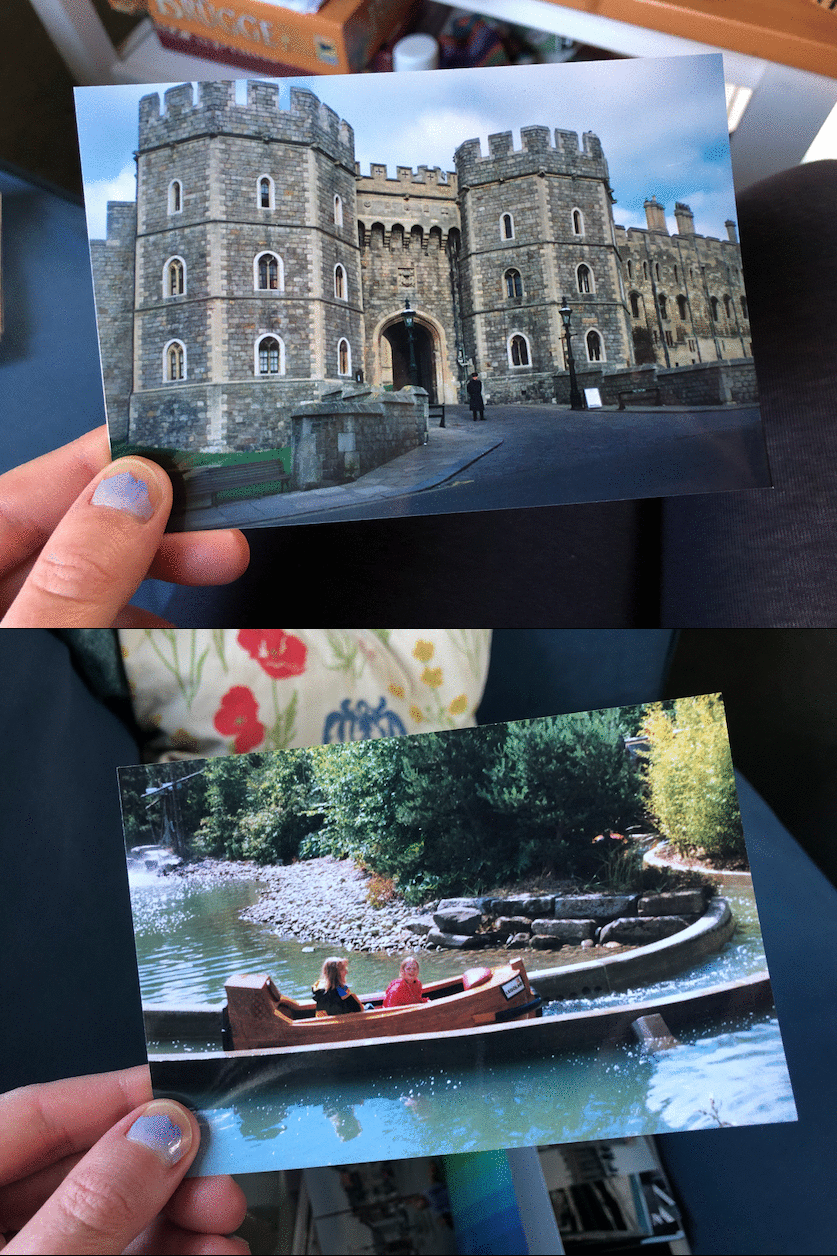
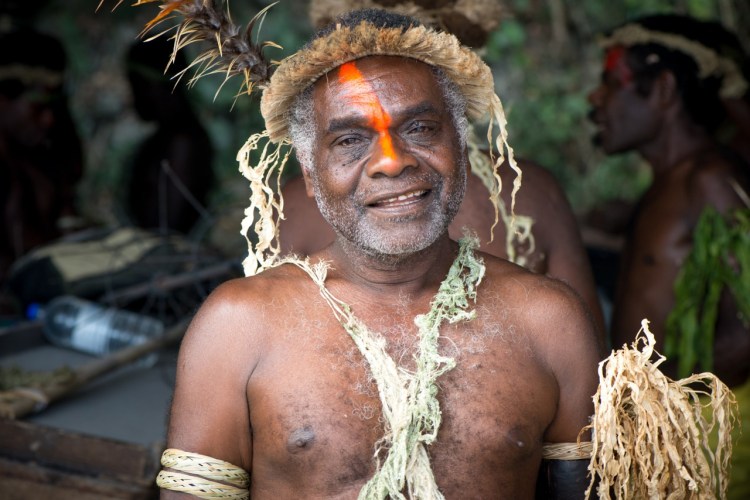


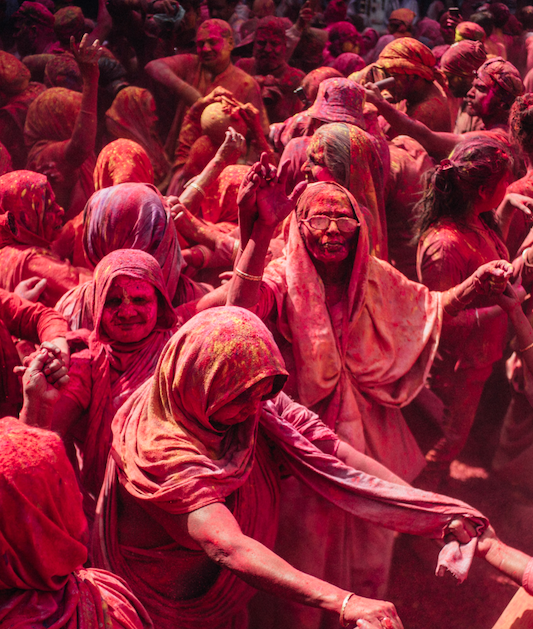



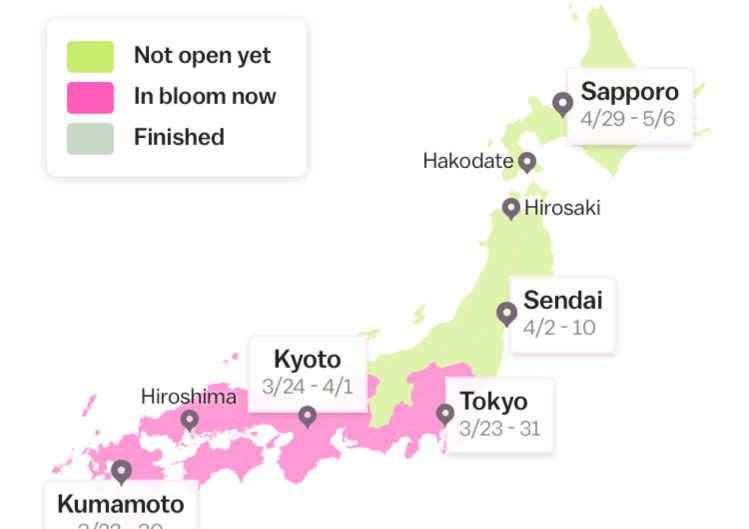
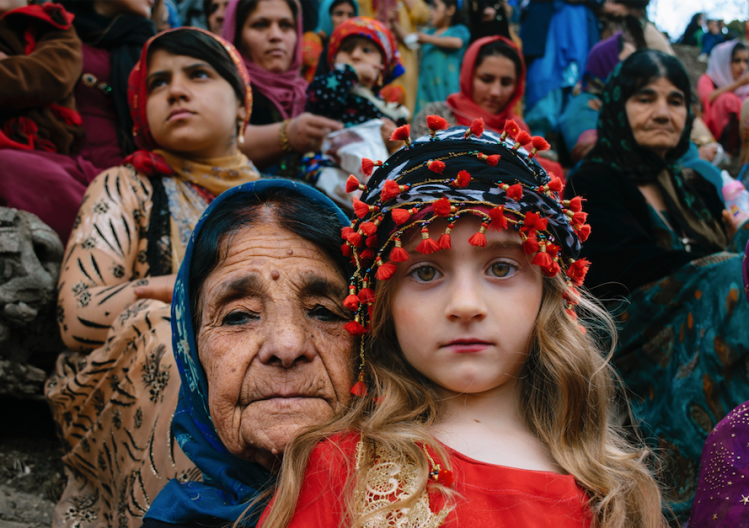
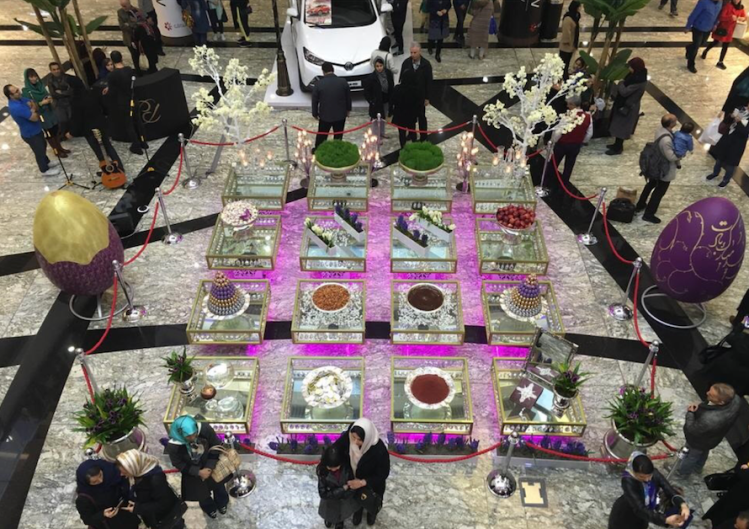
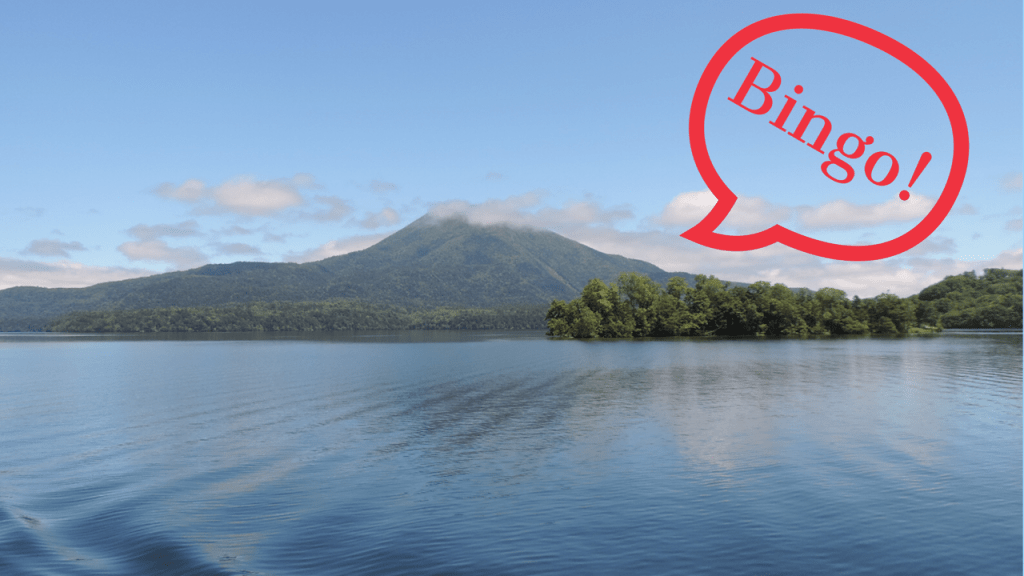

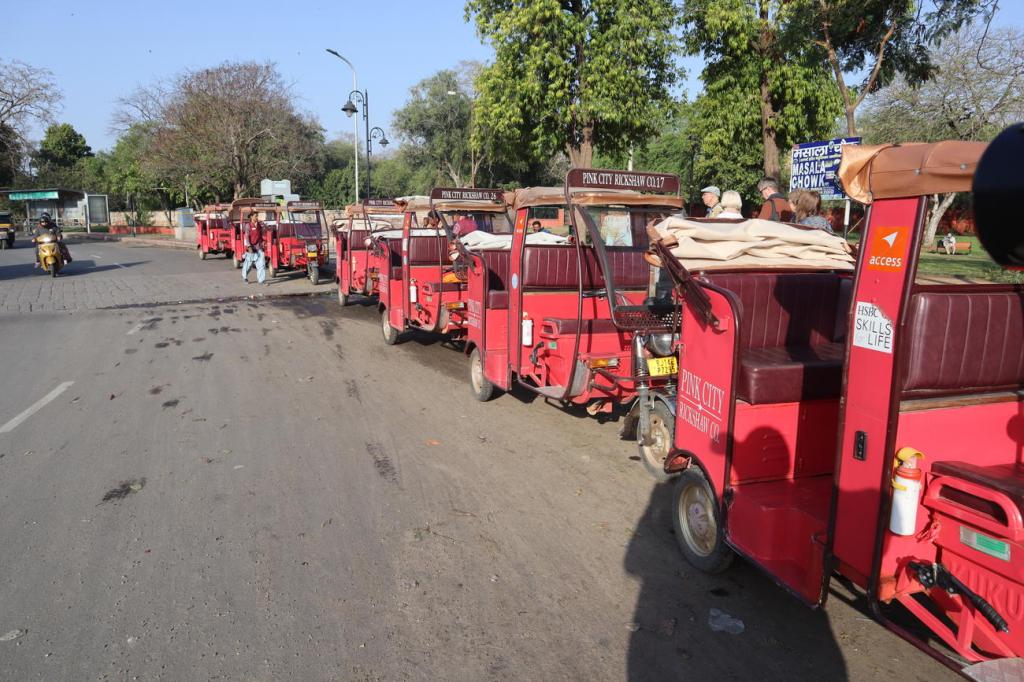

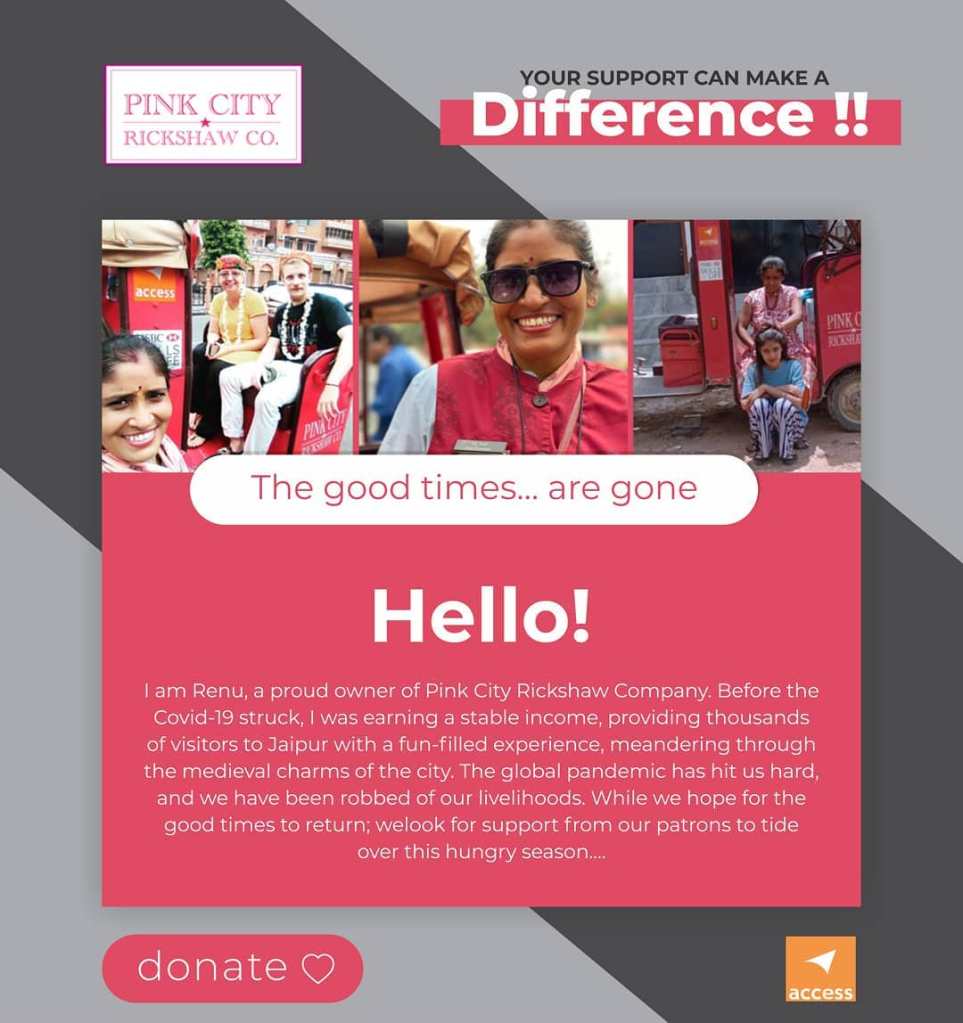
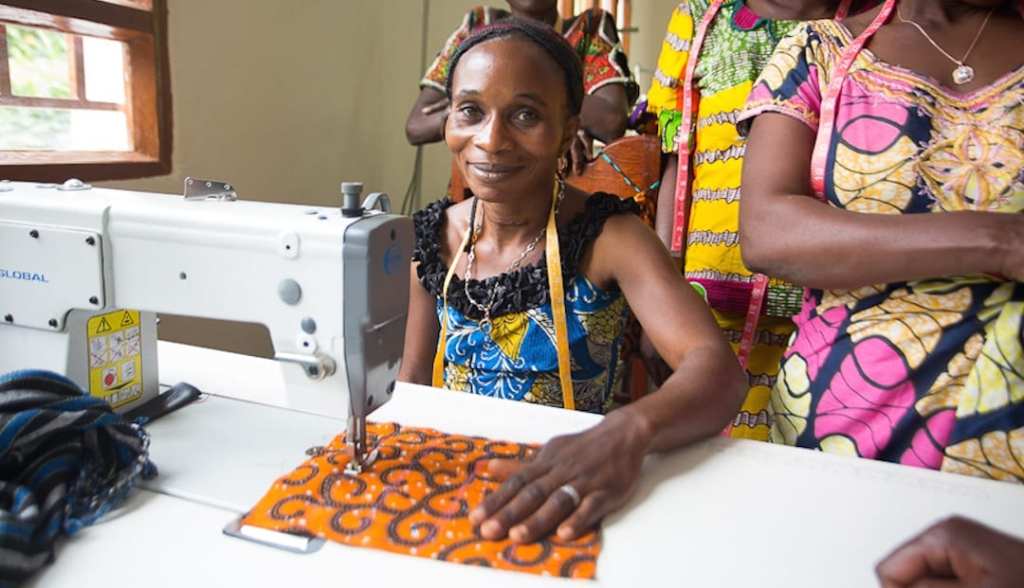

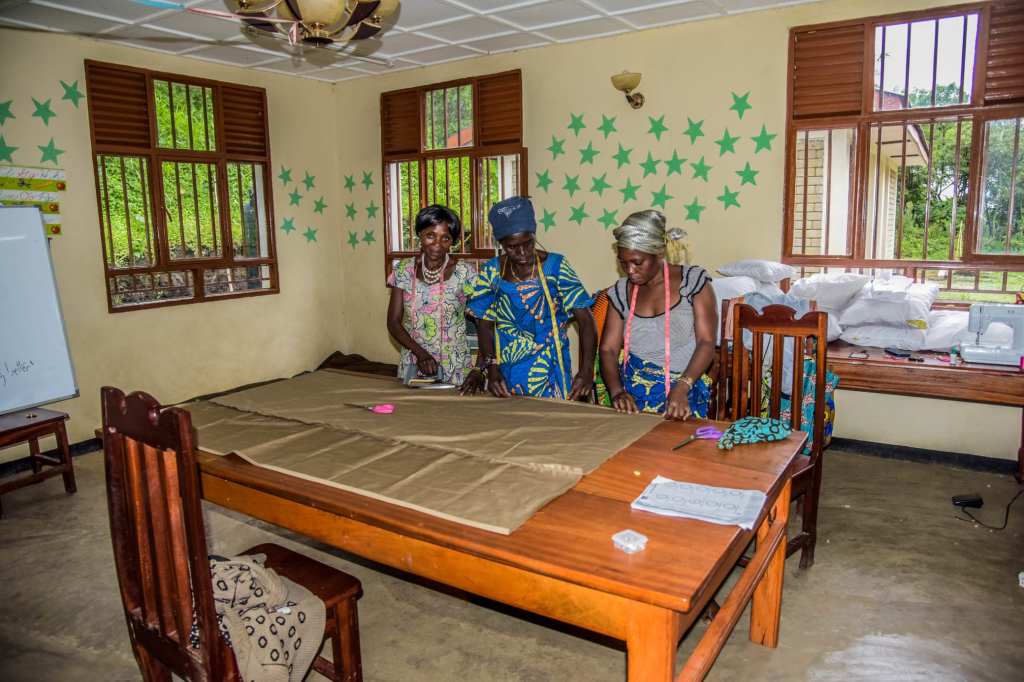
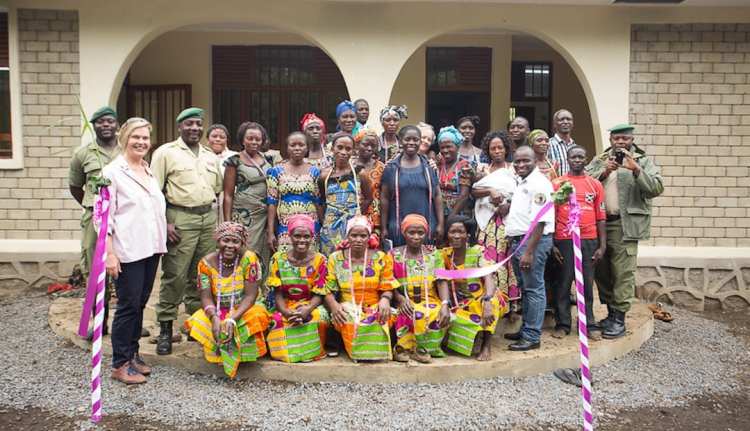


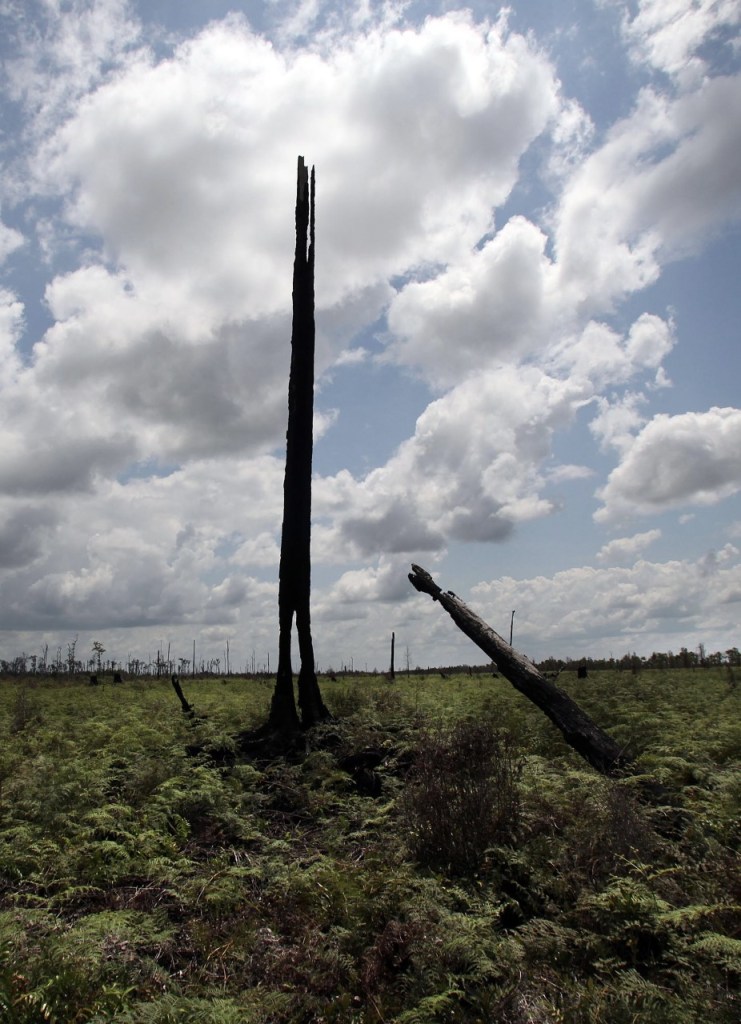


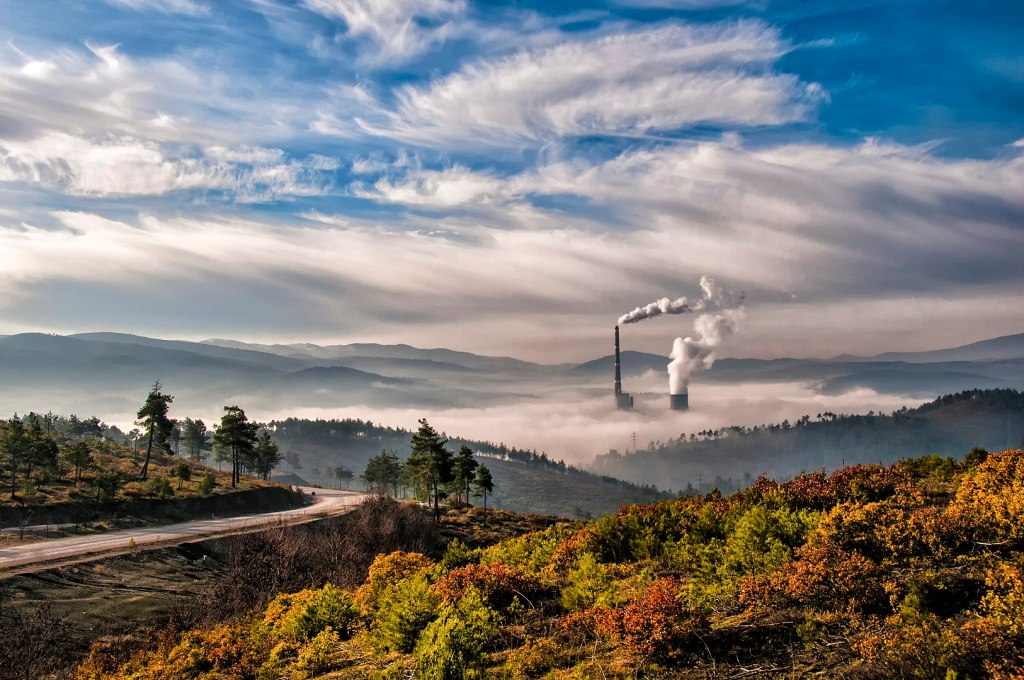

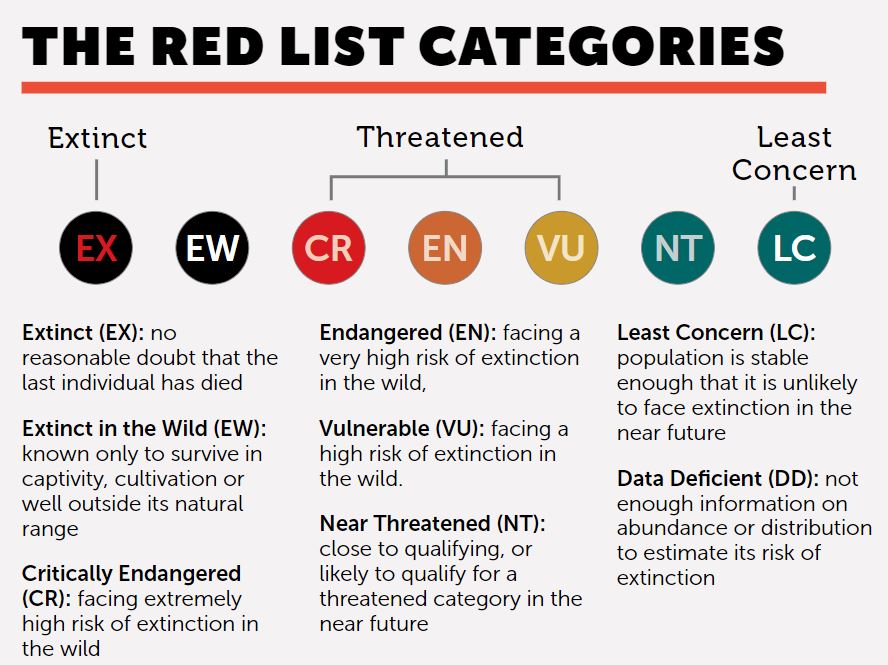

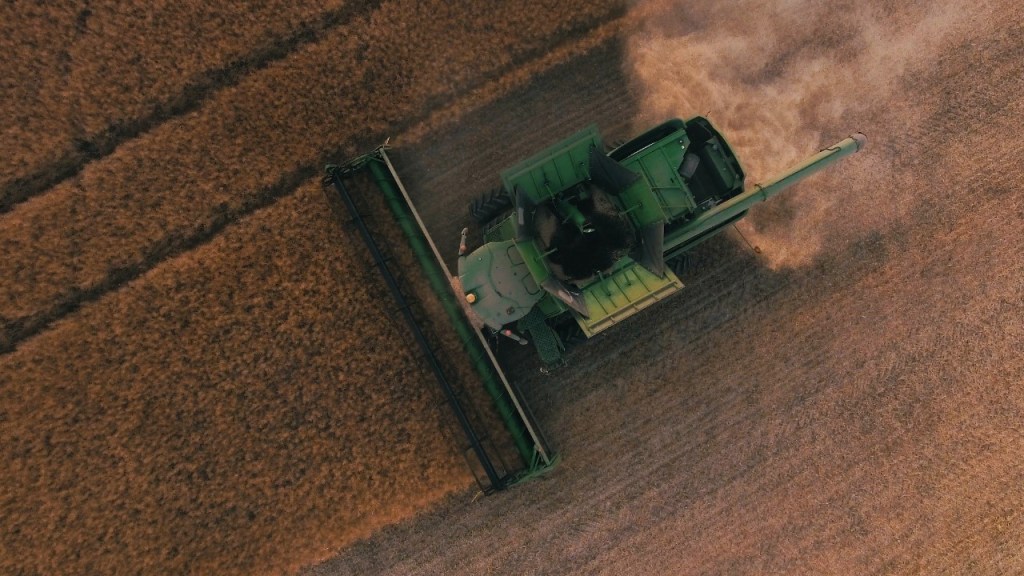


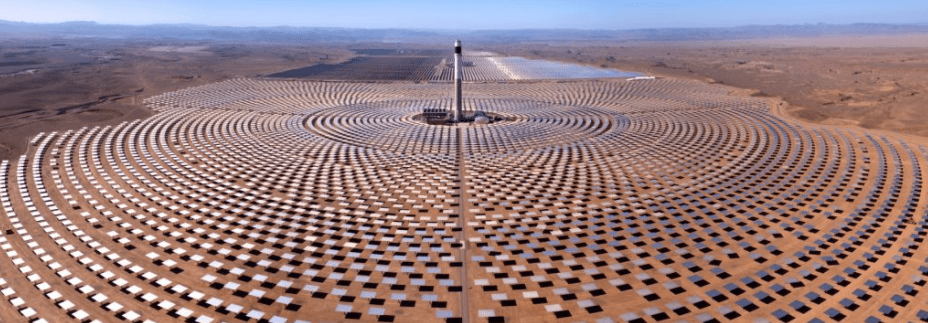
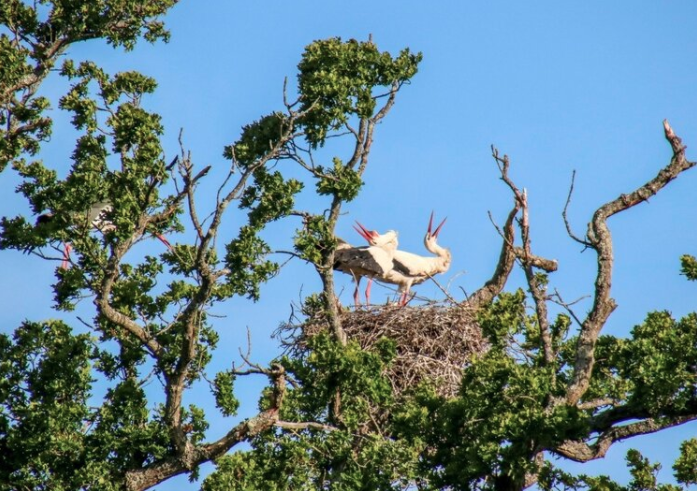

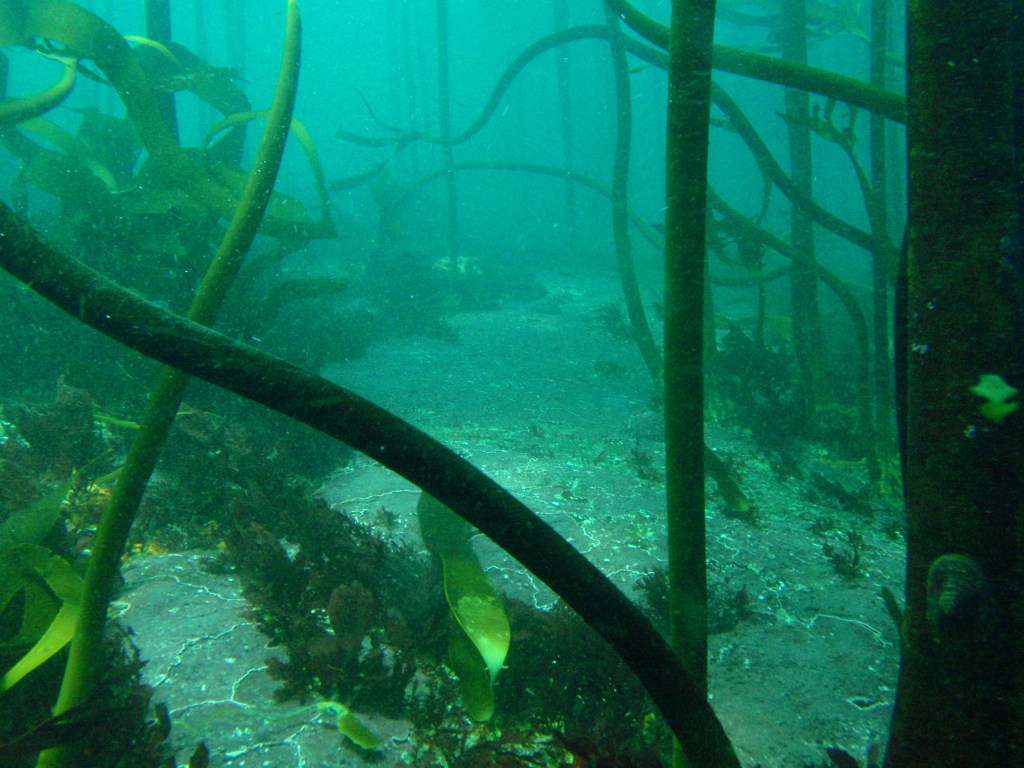

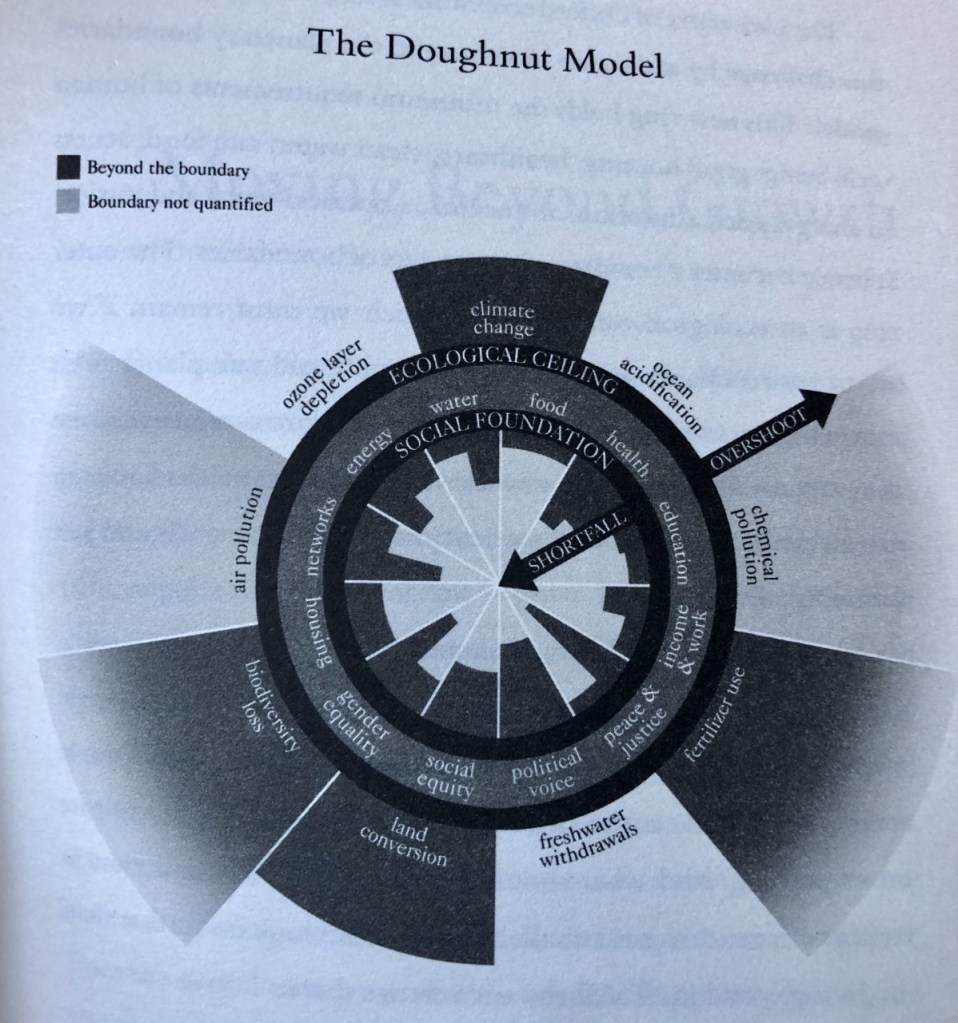
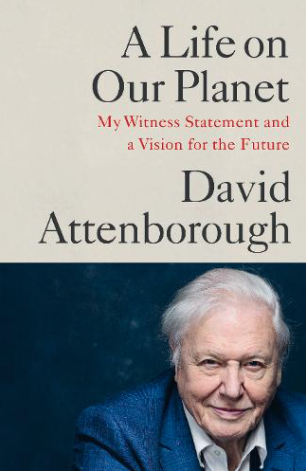




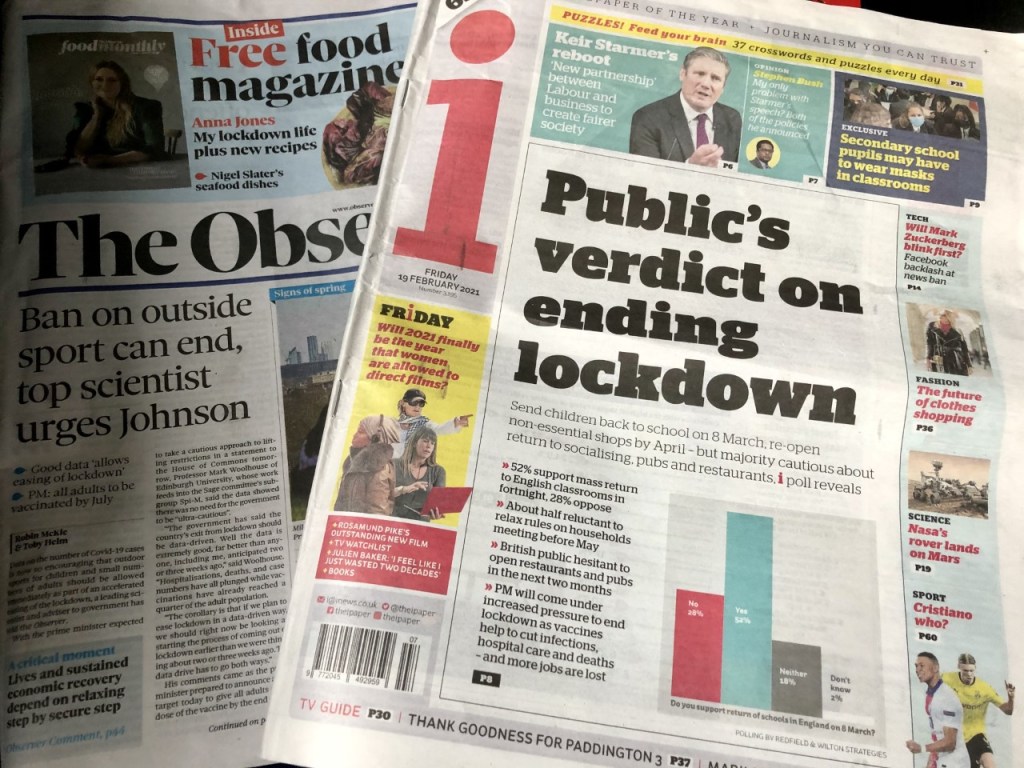


 Kate on her travels